Showing posts with label Animals. Show all posts

08 January, 2012

Star Turtles


Turtles have been inhabiting our planet for more than 150 million years. Star Turtle is a species of Turtle found in dry areas and scrub forest. This species is quite popular in the exotic pet trade. Star Turtles have a yellow or tan head. Females are much larger than males and have a shell which is much broader.Life span is up to 80 years.


ScienceDaily (Feb. 22, 2011) — A report issued Feb. 22, 2011, co-authored by the Wildlife Conservation Society (WCS) working in conjunction with the Turtle Conservation Coalition, lists the 25 most endangered turtle species from around the world -- some of which currently number less than five individuals.

Decimated by illegal hunting for both food and the pet trade along with habitat loss, many turtle species will go extinct in the next decade unless drastic conservation measures are taken, according to the report, which was released at a regional workshop hosted by Wildlife Reserves Singapore and WCS.

Illegal hunting for turtles in Asia for food, pets, and traditional medicines is a particular problem, the report says.

"Turtles are being unsustainably hunted throughout Asia," said co-author Brian D. Horne of the Wildlife Conservation Society. "Every tortoise and turtle species in Asia is being impacted in some manner by the international trade in turtles and turtle products.

Liz Bennett, Vice President of WCS Species Program, said: "Turtles are wonderfully adapted to defend themselves against predators by hiding in their shells, but this defense mechanism doesn't work against organized, large-scale human hunting efforts. The fact is that turtles are being vacuumed up from every nook and cranny in Asia and beyond."

10 October, 2006

Rhinoceros Unicornis

Name: Rhinoceros Unicornis
Derived from Rhis (Greek) Genitive Rhinos , the nose
Keras (Greek) horn of an animal
Unus (Latin) One
Cornus (Latin) genitive Cornus, the horn of an animal

Body Length: 11.7 ft

Shoulder Height: 6 ft

Tail Length: 70cm

Weight: 1.7 - 2.2 tons

Diet: Herbivorous

Social Structure: Solitary. A mother will be accompanied by her calf for several years.

Distribution Range: Grasslands and forests in the foothills of the Himalayas.

Conservation status: Endangered


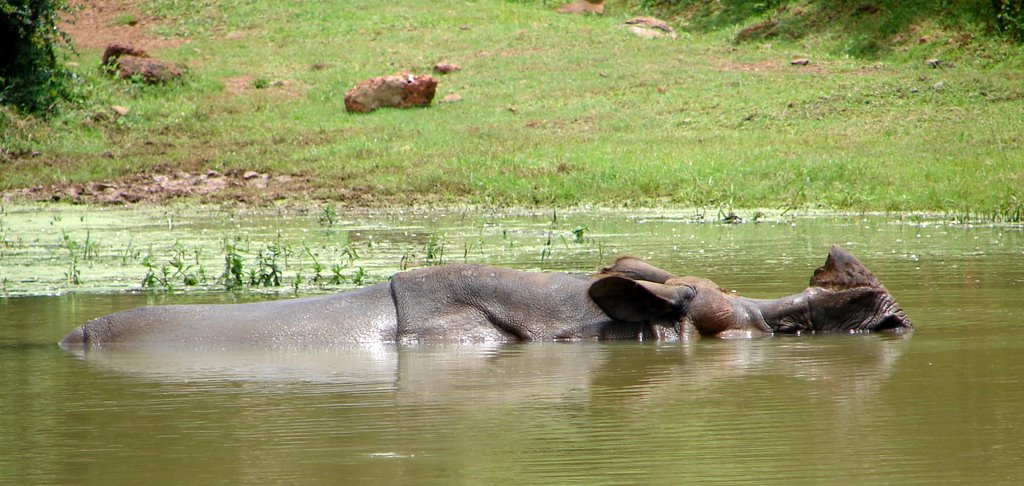
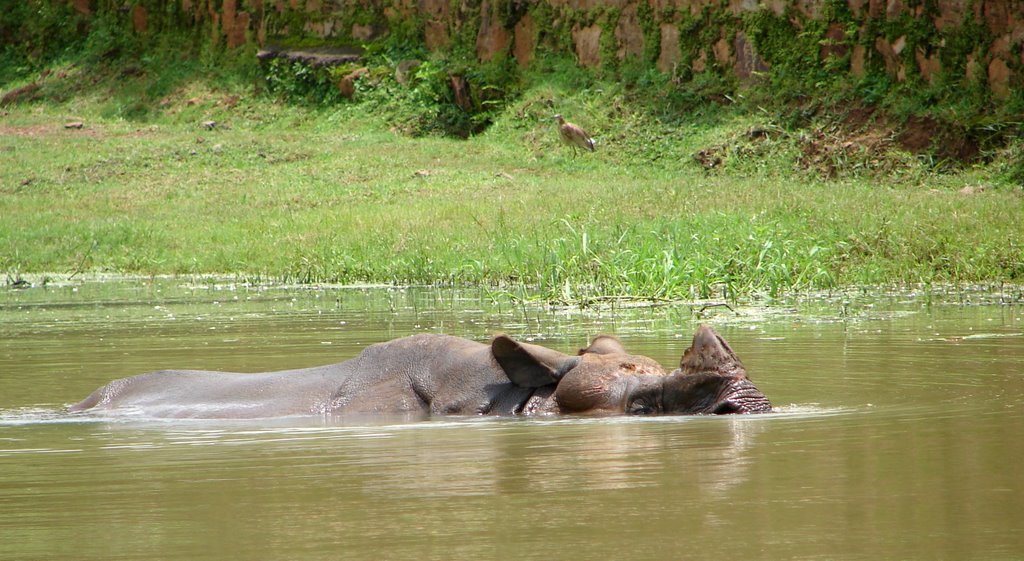
The Great Indian Rhinoceros is one of the largest rhinoceroses. Unlike other Rhinoceroses it has only one horn made of keratin, the same substance our fingernails are made of. They have excellent hearing and smell but poor eyesight. They can run at 35 miles per hour for a short time. They are excellent swimmers and they spend most of the time wallowing in water and mud to protect their skin.


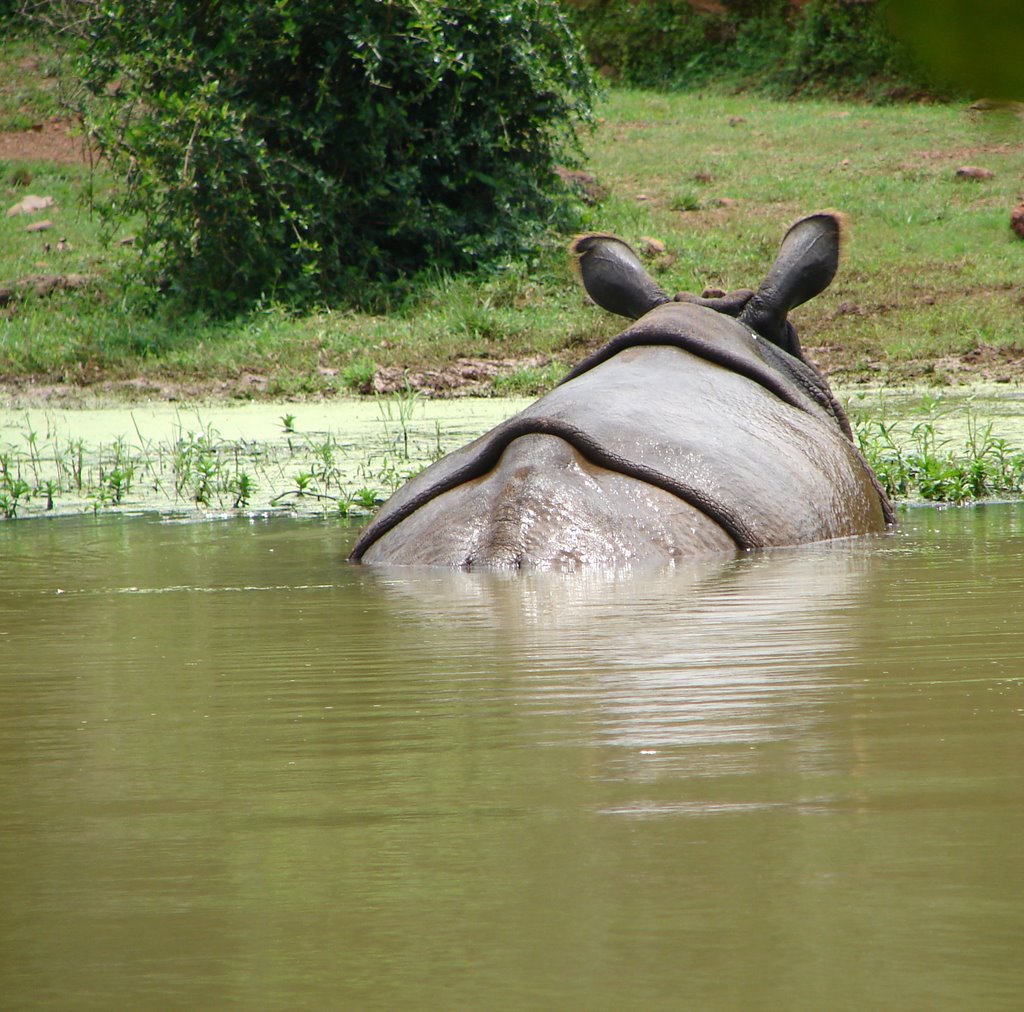
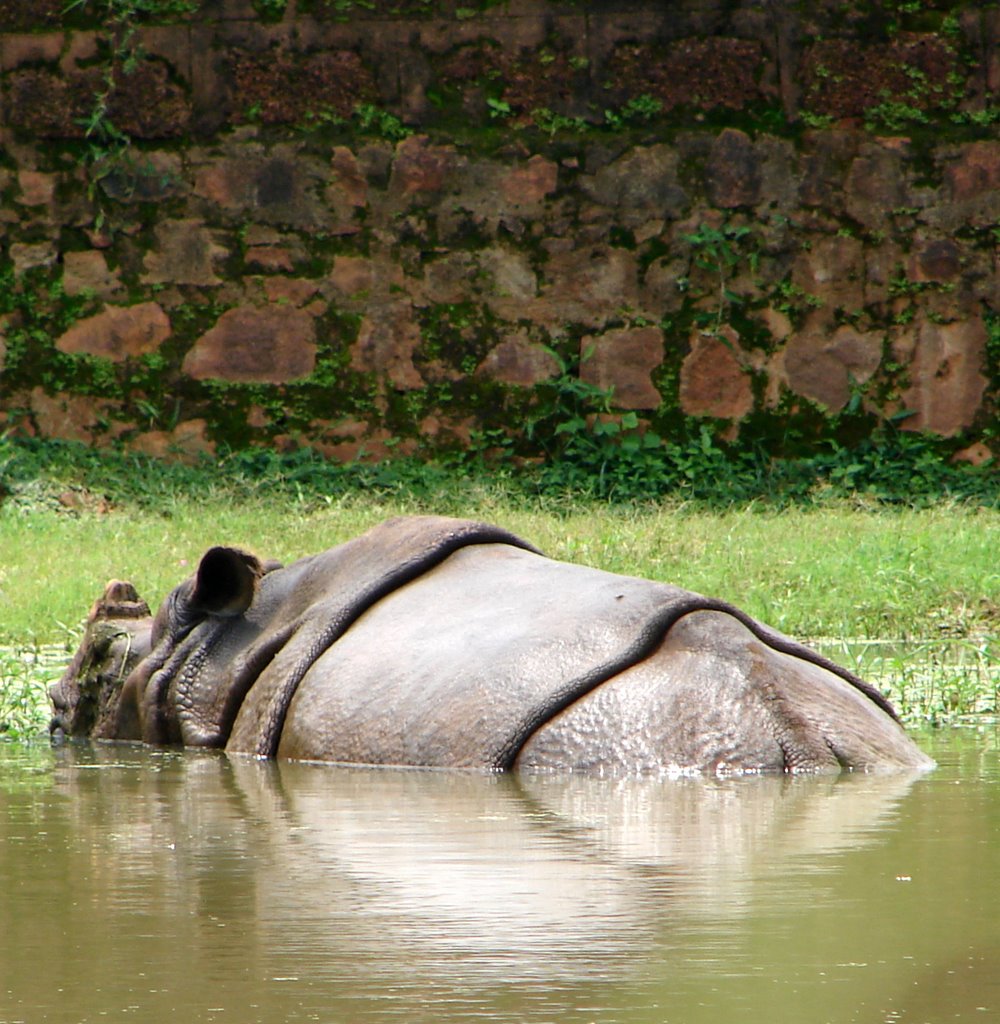
The skin is slight gray in color and has many folds and bumps giving it a heavily armored appearance. The interior of the folds is slightly pink, but, due to the mud wallowing, the coloration varies with the region's soil color. During fights, their folds of skin help protect sensitive areas. There is little hair on the hide except on the edges of the ears, eyelashes and the tuft of the tail. The lone horn on the nose is usually short and dull worn down by the use.


The Great Indian Rhinoceros is active throughout the day, although the middle of the day is spent wallowing in lakes, pools, puddles, ponds, rivers and resting in the shade. This activity is important for thermoregulation and the control of flies.


Badak Api
There are quite a few legends about Rhinoceros stamping out fire. They seem to have been common in Malaysia and Burma. Such Rhinoceros had special name "Badak Api" meaning "Rahinoceros fire". The animal would come out whenever there was a fire in the forest and stamp it out. No sightings have been reported in the recent history.

09 October, 2006

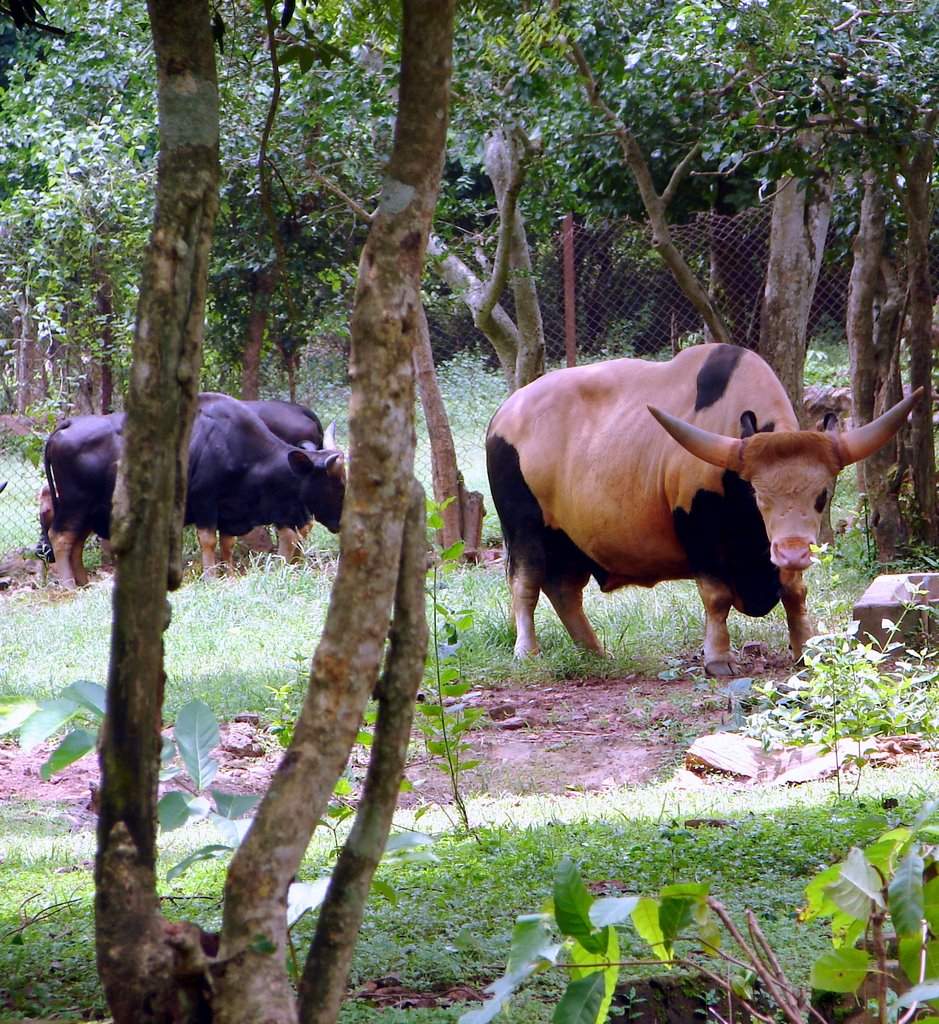
Mithun/ gayals/ Sia

Name: Mithun

Height: 5 feet at shoulder

Diet: Browse forest leaves, young plants

Distribution Range: Himalayan foothills of south / southeast Asia.

Characteristics: Prominent dorsal ridge on the crest of the shoulder, flat forehead, big hors with large base. Mostly brownish black and piebald. Most animals have white stockings :)


The name "Mithun" probably came from Assamese dialect. They are known as "Gayals" in India. Chin people (one of the Zo ethnic groups living inn Western Burma) call these animals "Sia".

Mithuns are smaller versions of domesticated Gaurs. Mithuns and Gaurs are related to other great Asian Bovines: banteng of Indonesia and kouprey of Cambodia. They are extremely docile. The Chins use the expression "as gentle as a mithun". The milk of Mithuns is rich in butterfat content. They were traditionally the ultimate sacrificial animal. They have been used by the Chins for barter.

08 October, 2006

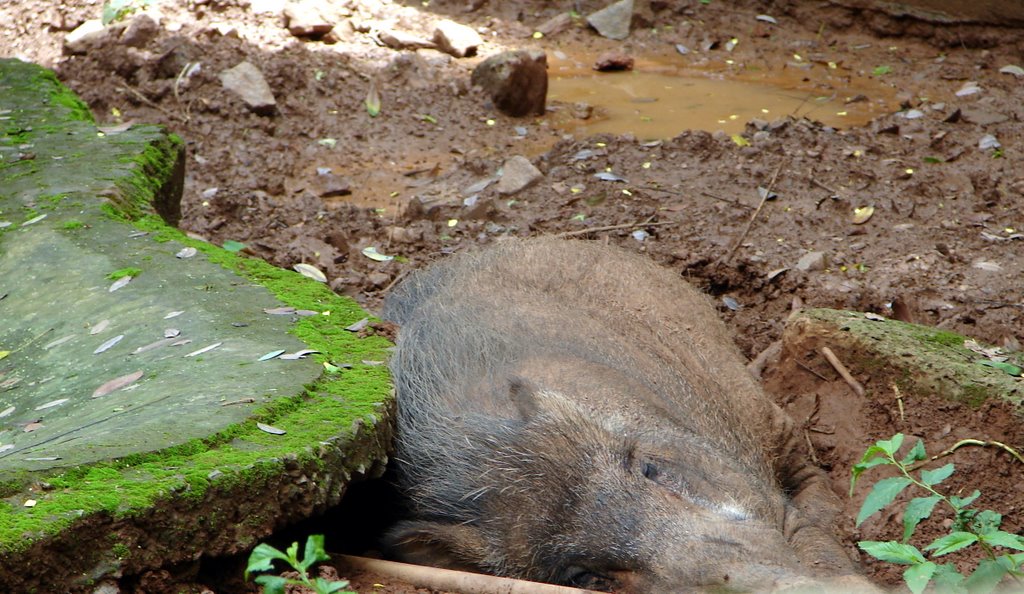
Indian Wild Boars

Name: Indian Wild Boar

Height: 90Cms

Weight: 100 - 225Kgs

Diet: almost anything: nuts, berries, carrion, roots, tubers, refuse, insects, small reptiles, young deer and lambs.

Distribution Range:Asia Minor peninsula, India and Far-East

Wild boars are the wild ancestors of the domestic pig. They live in groups called sounders consisting of 20 - 50 animals. Adults are part of the sounders only during autumn breeding season. The boars are nocturnal. They have thick, short bristly coats ranging from grey to black.


Wild Boar in Hindu Mythology

Wind or storm God Rudra rides a wild boar.

In the Vedic literature Varaha was related to two different myths: the boar myth, in which the boar served as the sacrificial animal (yagna) and the cosmogonic myth. In this myth Varaha is not yet associated with Vishnu but with the Vedic god of creation: Prajapathi. It was Prajapathi who 'saw' the earth in the primordial waters while he moved in them as the wind. With his tusks, he took the form of Varaha in order to lift the earth from the waters, establishing a primary creation.

Later, in epic-puranic literature, Brahma takes over the creator function from Prajapati; so it is Brahma who takes the form of Varaha in order to lift the earth again from the waters, or as it is sometimes expressed: from the nether world (patala), where it had sunk after the earth's destruction by fire and deluge at the end of that certain world period (kalpa). Hence, Varaha's act of lifting the earth is no longer a primary creation, but has become a 'secondary' creation, a periodical act of renewal serving to establish the world anew, again and again.

The Brahma character of the myth, however, will change under the influence of expanding visnuism: Varaha is seen as a creator form of Visnu. Besides, some late-epic and puranic texts show an innovation in the cosmogonic myth: now Varaha has not only re-established the earth but also killed the demon king Hiranyaksa who lived in the nether world and had conquered the gods.

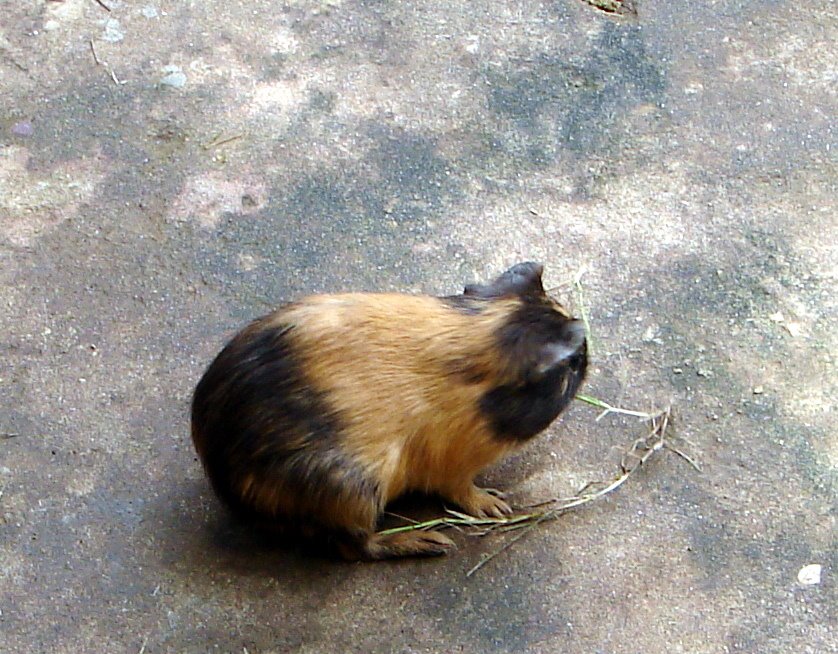
Meerschweinchen -- "Little Sea Pigs"


Misnomer: Guinea pigs

Length: 25 - 40 cm

Weight: 0.5 - 1.5 Kg

Life span: 4 - 8 years

Diet: grass, fresh raw fruits and vegetables

Breeding: Gestation lasts from 63 - 72 days.

Pups are well developed, including fur, teeth, claws and full eyesight when they are born. Males may demonstrate courtship behavior in the second or third week after birth. Unlike other rodents of the similar kind, they mate for life in the same pair bond.

Origin of term "Guinea Pig"
Guinea pigs are neither pigs nor do they come from Guinea. Some think that some of the sounds these vocal animals make remind them of pigs. They are also built like a pig with a large head relative to the body, a stout neck, and round rump with no tail and they spend large amount of time eating.

They were first domesticated in 2000BC for food by the mountain tribes in the Andean region of S.America. Dutch and English traders brought the Guinea pigs to Europe where they became popular as exotic pets.

The term "guinea" in guinea pig is even more difficult to explain. One theory suggests that the animals were brought to Europe via Guinea and hence the term Guinea. Another theory suggests that the term is a corruption of "Guiana", an area in S.America. Common misconception is that they were sold as a closest thing to pig one could get for a guinea (Old British coin whose value was 21 shillings)

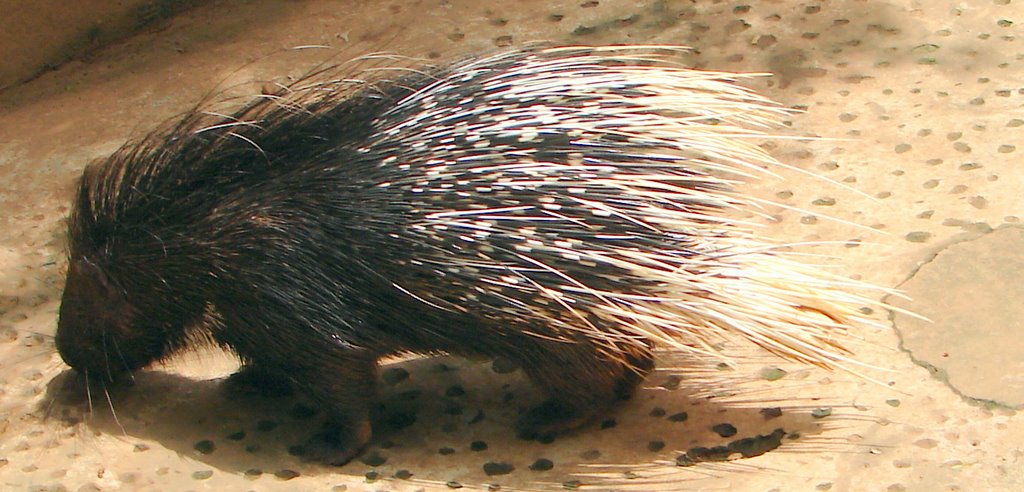
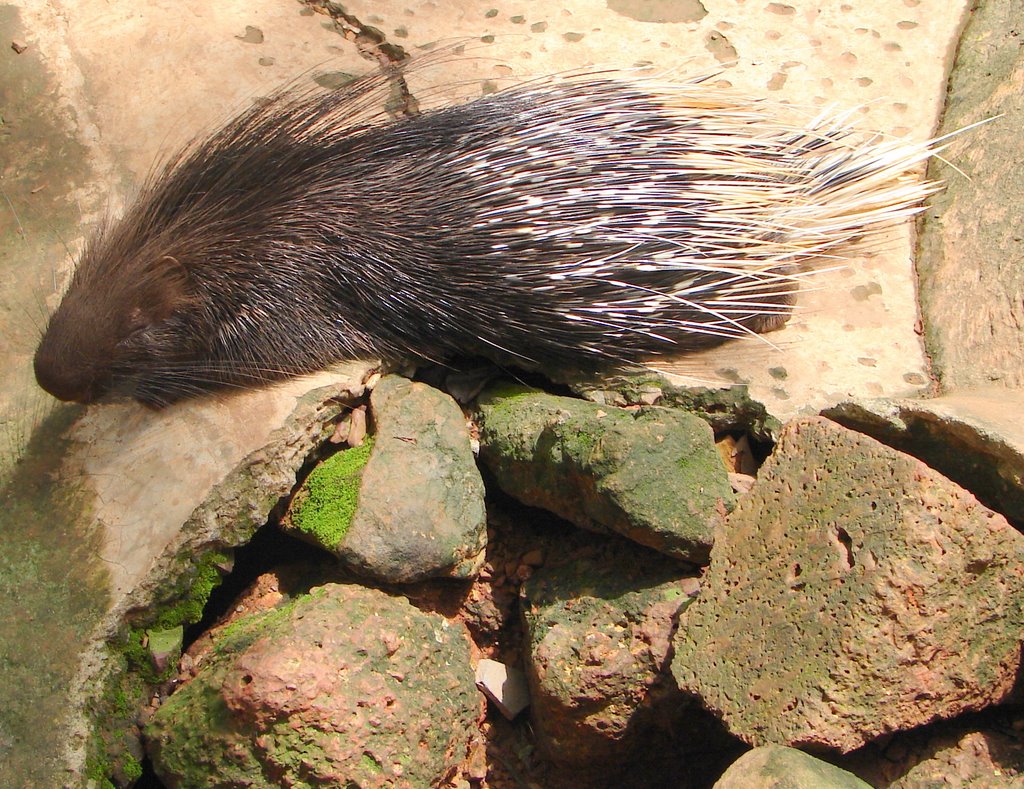
Indian Porcupines


Name: Indian Porcupine

Weight: 11 - 18Kg

Length: Head and body measure 70 -90 cms in length. Tail is additional 8 -10 cm. The hair is modified to form multiple layers of spines. Each quill is brown or black in colour with alternating bands of white. Quills near the neck and shoulder are the longest measuring 15 - 30 cm.

When irritated or alarmed, the Indian porcupine raises its quills and rattles the hollow spines on its tails. If the disturbance continues, it launches a backward attack and clashes its rear against the offending animal. This drives the spines deep into the enemy and often leads to sever injury or death. Quite often the quills are dislodged and remain in the victim.

Diet: Vegetables, fruits, grains and roots. They also chew on bones for minerals (calcium) that help their spines grow.


Reproduction: Gestation lasts for 240 days. The young are born with their eyes open and they have short soft quills. Brood size is 2-4. Indian Porcupines are monogamous with both parents being found in the burrow with their offsprings throughout the year.

07 October, 2006

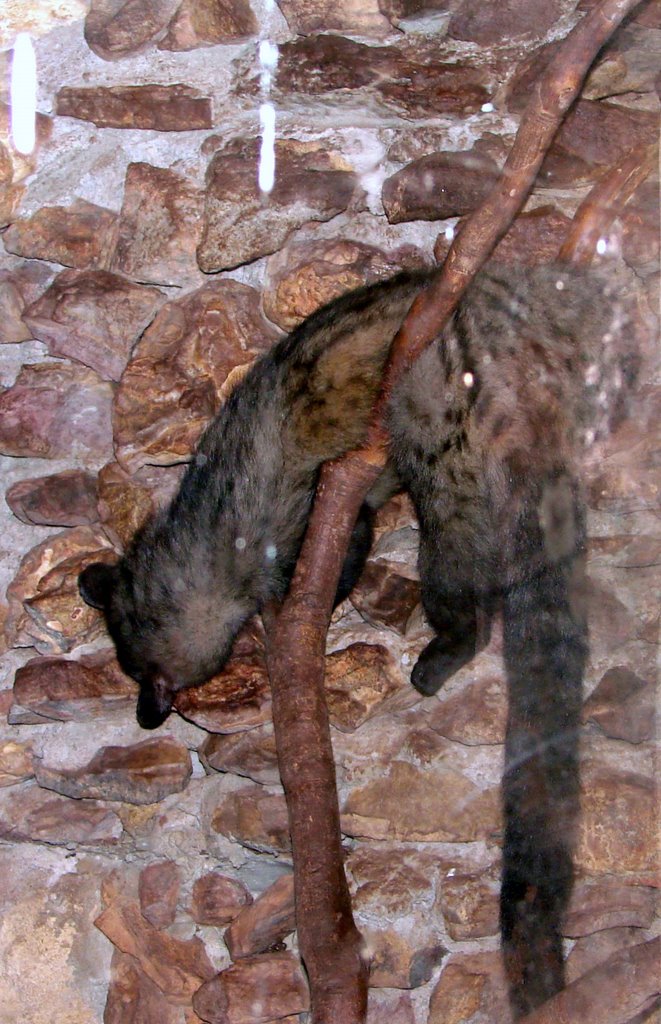
Civet Cat


Name: Civet cat

Length: 76 Cms (excluding the 42Cm tail)

Weight: 11Kgs

Distribution Range: S-E Asia, Southern Europe and Africa

Diet:Carnivorous


Civets are not true cats. They have a weasel-like face, cat-like body and long tails. Their fur may be grey or brown and they are marked in various patterns. They have scent producing lands that produce yellow secretion having a distinctive musky odour. Commercially they are used as a perfume fixative.

The civet in the picture is a common palm civet. This is also known as Toddy cat because of its habit of climbing the palm trees to drink the toddy that flows into jars hung by toddy collectors. It is generally balck, blackish or brownish grey. The long hairs of the coat is dark throughout. These dark areas with a contrast of paler surrounding hairs suggest a pattern of black stripes on the head. These animals are arboreal and they rest in the day on the branches of trees or curled up in hole in the trunks. They feed on small animals, birds and insects.

Legends from Andaman
The Aka-Kol and the A-Pucikwar tribes had legends that made the monitor lizard into the creator of mankind. The lizard was said to have climbed up a tree one day and found the civet cat stuck up there. After helping her down, the two got married and their off-spring were the human ancestors.

In a legend from Akar-Bale tribe, the fire was saved from the flood by a monitor lizard and the civet cat. When the monitor lizard found that he could not carry the fire up the tree, his wife civet cat took it from him and carried it to the top of the hill where she kept it safe until the rain and flood stopped.

Pangolin


Pangolin derived from the Malayan meaning "rolling over", refers to the animal's habit of curling into a ball when threatened.

A Chinese legend
According to a Chinese legend, two ogres were jailed in the Calabash mountains. One of the ogres had a scorpion spirit and the other a snake spirit. One day a pangolin drills a hole on the slope and and the two spirits escape from the cave and cause havoc. The pangolin hurries to an old man and says that by growing calabashes in 7 colours they can annihilate the devil spirits. The old man grows red, orange, yellow, green, cyan, blue and purple calabashes. The spirits find out about this with the help of a fortune teller mirror. They try to destroy the calabashes but fail. They seize the old man and the pangolin and take them away.

The calabashes ripen and fall to the ground. They turn in to boys with different coloured suits. The boys fight the evil spirits, defeat them and save the old man and the pangolin.

Description
Pangolin has a long tail, sticky tongue, conical head and short powerful limbs. The body is covered with large, flat, imbricated horny scales. The leaf shaped plates re made of keratin, the same material that makes up our hair and fingernails. This mammal is found in the the tropical forests of Asia and Africa. Some pangolins live in trees but most of them are ground dwellers. Most species sleep during the day and feed at night. They dig the termite mounds with their strong legs.

Self defence: They roll into and impenetrable ball when threatened. They have razor sharp scales that they lash out. They have scent glands similar to skunk which they can use to spray enemies. They can run at a speed of KMPH.

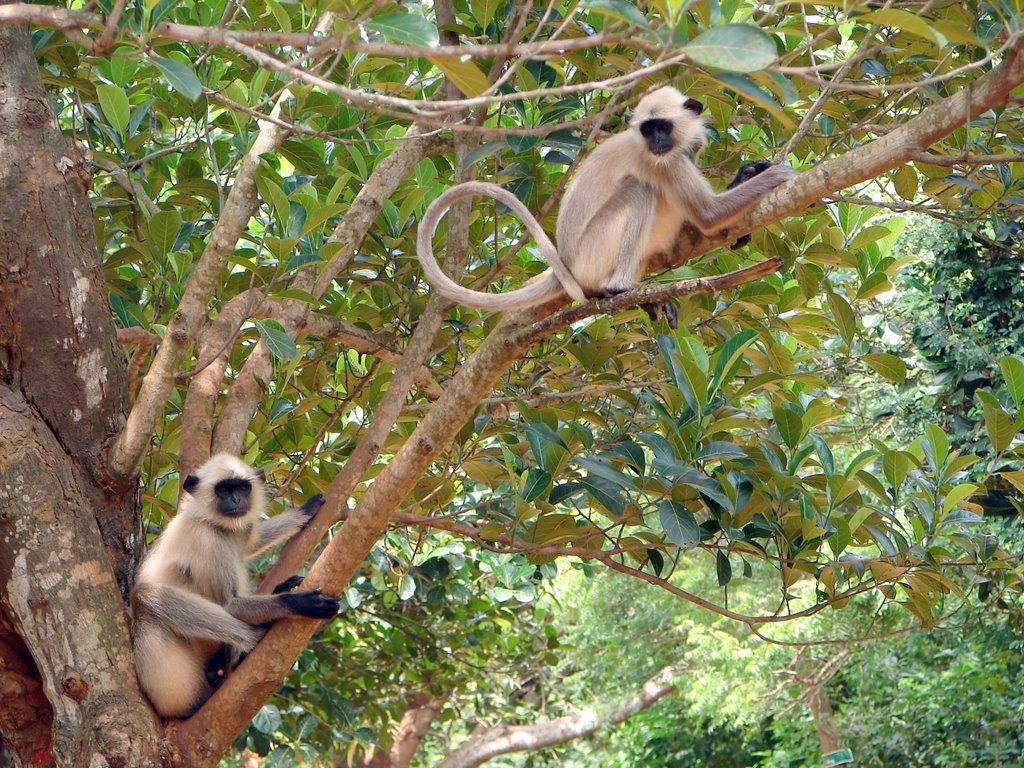
Hanuman Langurs


The legend of the sacred monkey traces back to more than 20 centuries. Hanuman leaped to Srilanka to rescue his master's abducted queen and set the palace on fire with his tail. This fabled deity is still worshipped by the Hindus for his heroic deeds.

Scientically these monkeys are known as Semnopithecus entellus and they are commonly known as Hanuman Langurs. The name 'langur' is derived from the Sanskrit term 'Langulin' which means 'having a long tail'. These long tails (upto 3 feet or more) help them balance on high branches.

These langurs are able to survive in a diverse range of environments, from the brutal hot sands of the Thar desert to the snow capped Himalayas. Sara Hrdy, an anthropologist at the University of California - Davis explains that "they can live on anything, even strychnine". Like all leaf-eating (colobines) monkeys, Hanuman monkeys have "sacculated" stomachs that can break down plant materials like mature leaves, unripe fruit, seeds and bark. Their stomach has anaerobic bacteria colonies that digest cellulose. They can even survive on poisonous "Lantana camara" that are even kill a horse. In the evergreen forest of Ramnagar, they survive on fruits and young leaves during monsoon. They also feed on protein rich caterpillars. During winter, they survive on flowers and dry fruits of a large climbing liana. During spring they eat any plant that they can find.

Social Pecking Order

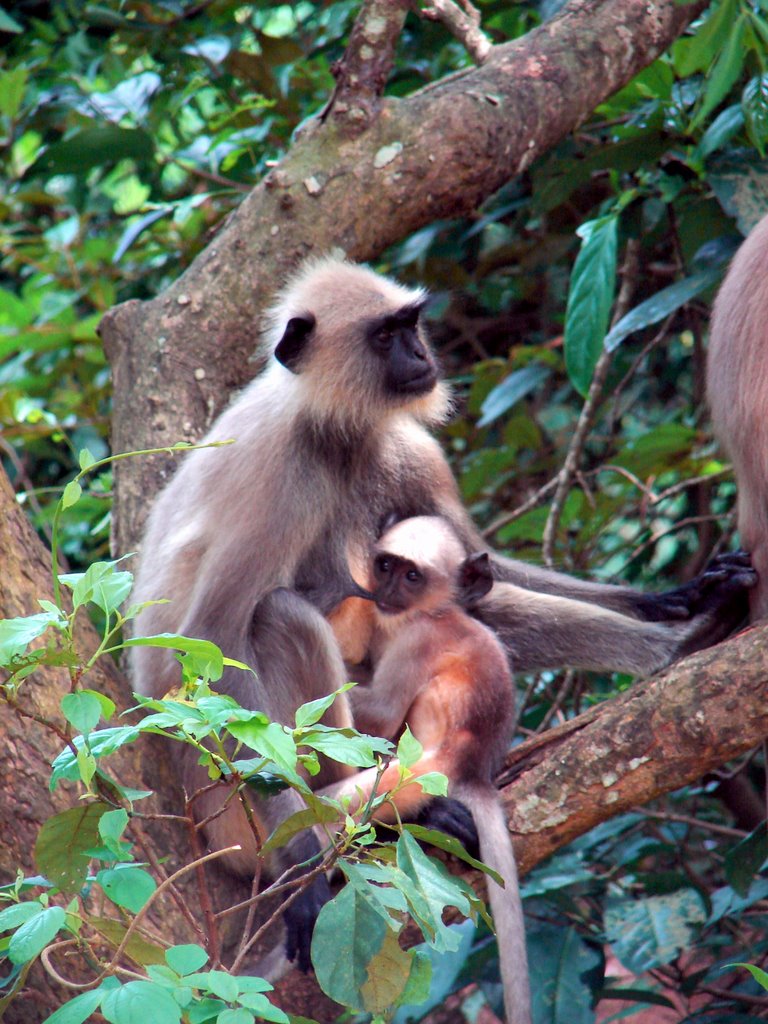
The langurs spend most of their time on the trees to escape from predators like tigers, wolves, wild dogs, hyenas, leopards and pythons. The highest ranking male sits at the top of the tree. The females with babies sit below the male followed by the younger females. The riskiest posts at the base of the tree are usually occupied by the adoloscent males. Sub-adult males are eventually kicked out of a troop to avoid inbreeding. They then join other troops to form a group of bachelor males. The females stick together in a single territory for their entire lives, while the males time in the troop is short-lived.

The bachelors roam around testing the males with harems. When they see a weakness they attempt to takeover. The bachelors rush into the troop whopping and the alpha male responds to the call and combats. The war ends when the bachelors retreat or drive off the alpha male and seize the command of the troop. The strongest member of the bachelor group evicts his fellow comrades and gains full control of the troop. Sometimes the succeeding male snatches the unweaned infants from their mothers and sinks his canines into their skulls. Such infanticide was first documented in 1960s by the Japanese scientists doing their research in India.

Sara Hrdy explains that the infanticidal males cancel the female's last 'choice' and forces her to choose him instead. The mother becomes fertile sooner if she stops nursing and increases the new male's chances of breeding with her. This is linked to Darwin's theory of sexual selection which states that males will compete for the fertile females with the females choosing the best male.

The females will stick together and fight the males trying to snatch the infants. A female will support her sister, cousin, aunt expecting that they will support her in times of need. The females seem to be evolving new strategies. They have noticed that a male is hesitant to kill his own offspring. The females take advantage of this behaviour and so mate with a variety of males outside the troop besides the alpha male.

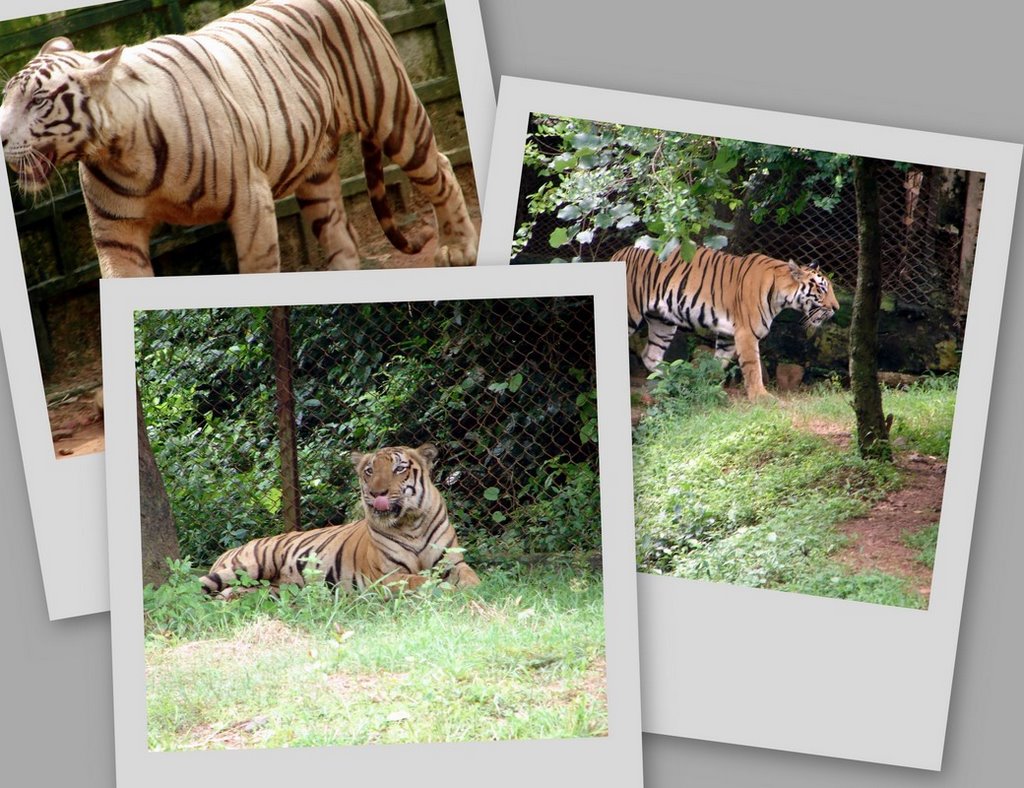
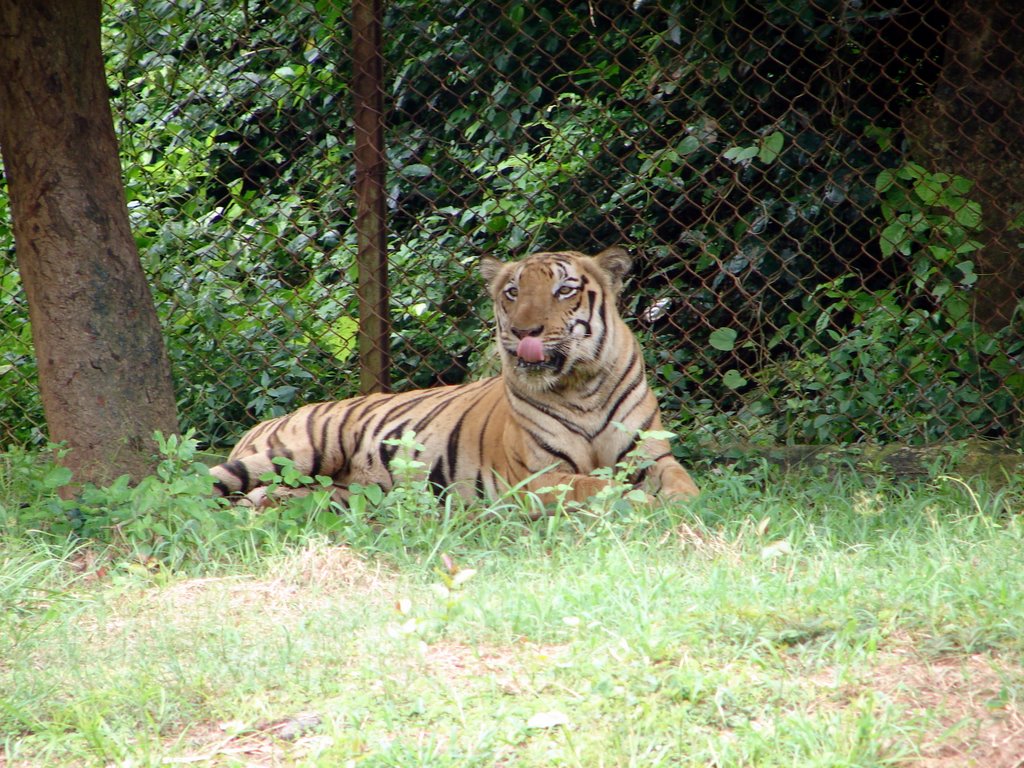
Royal Bengal Tigers


Name: Royal Bengal Tiger

Body Length: 140 - 280 Cm.

Weight: 200 - 300 Kg (males)
130 - 170 Kg (females)

Diet: Pure Carnivores

Distribution Range: India, Bangladesh, Nepal, Bhutan, Burma

Conservation status: Endangered


  • Royal Bengal tigers are the descendants of a marten-like animal called the miacidae that evolved during the late cretaceous period. In the past century, the world has already lost 3 out of 8 tiger subspecies. The Bali(last tiger probably died in the 1940s), Caspian (extinct in 1970s) and the Javan tigers(1980s saw the last of the 20 pound animal that could take down a 2000 pound bull) have all become extinct and now the South China tiger faces the same fate.


  • The stripe patterns of the largest Asian cat differ from one individual to the other and from one side of the body to the other. They are like fingerprints with no two patterns alike.


  • It is reported that the tigers can cover up to 10mts in a horizontal leap.


  • Camera traps have snapped photos of a wild tiger in the himalayas at a surprising elevation of 13,000ft. This offers new possibilities for tiger habitat.


  • Tigers in Indian Mythology

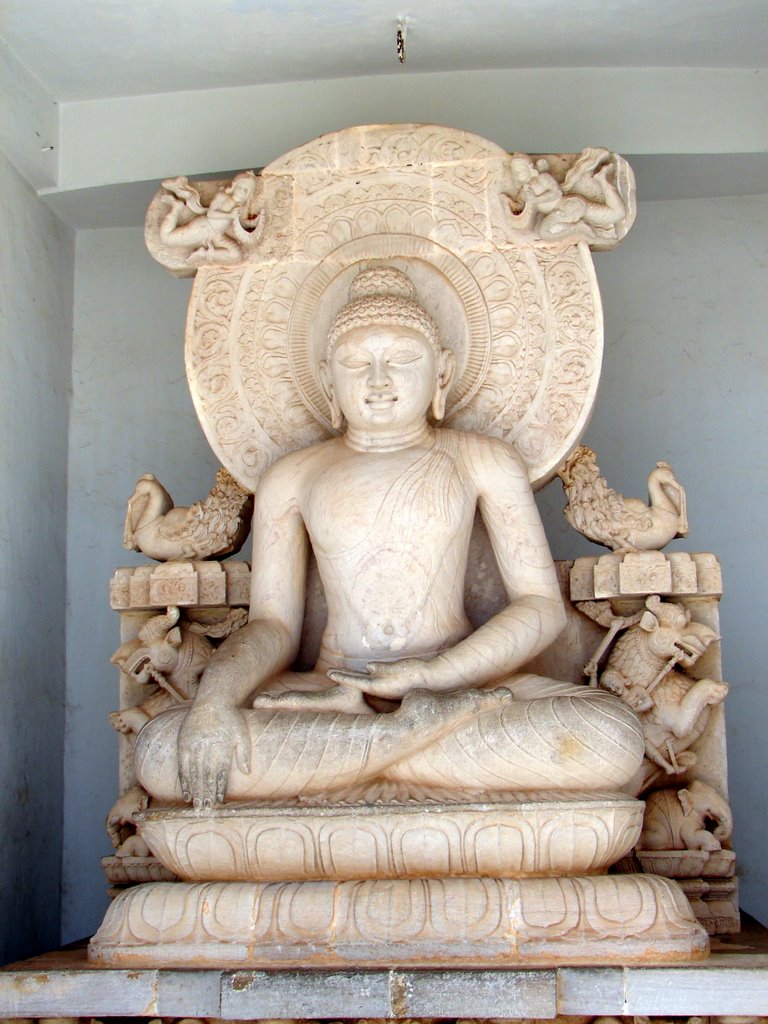
    Young prince Mahasattva was walking over the hills with his brothers when he saw a tigress with her two cubs. The tiger was a little more than a skeleton and she was about to eat the young cub to satisfy her hunger. Wanting to save the cubs, Mahasattva threw himself in front of the tigress and waited for her to eat him. The tigress was so weak that she couldn't even bite. Mahasattva pricked himself with a sharp thorn and drew some blood. The tigress licked the blood and gained enough strength to devour the prince. The young prince was none other than Buddha.

    It is believed that in many parts of North India the Tiger God was worshipped by both Hindus and Muslims.


    Tigers in NandanKanan

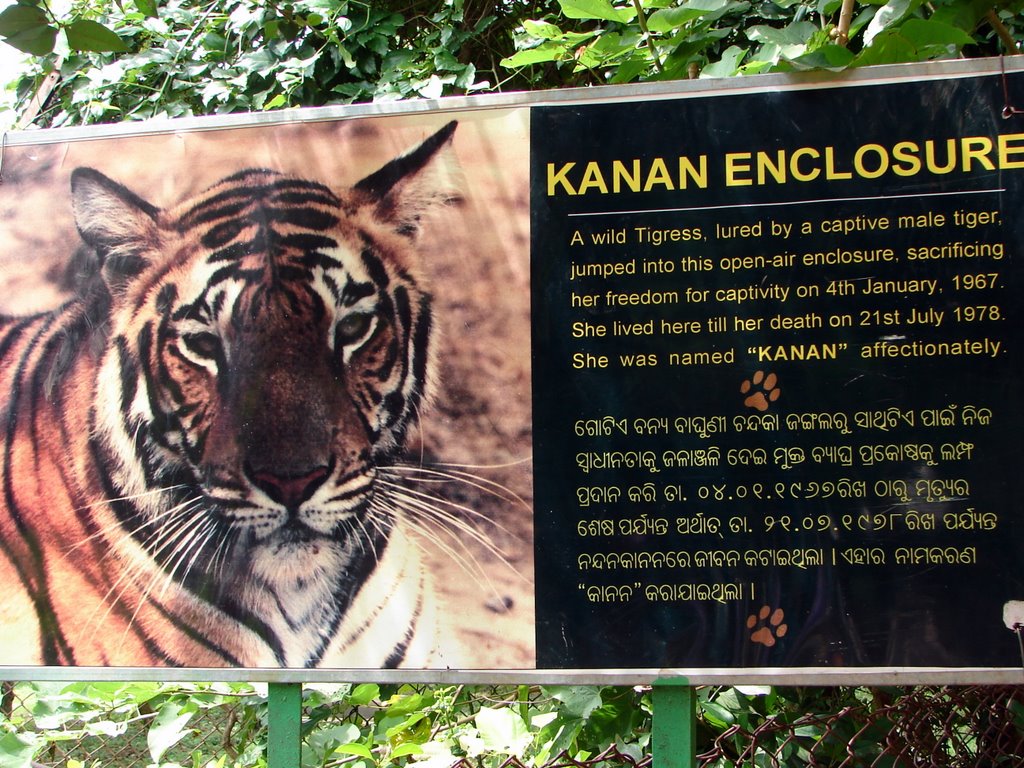
    A wild tigress (probably the last in the forest surrounding the park) jumped a moat into a newly constructed tiger enclosure to mate with its sole occupant. She was fondly known as 'Kanan' and she lived here for 11 years and died in 1978 due to natural causes.


    Causes for White Tigers
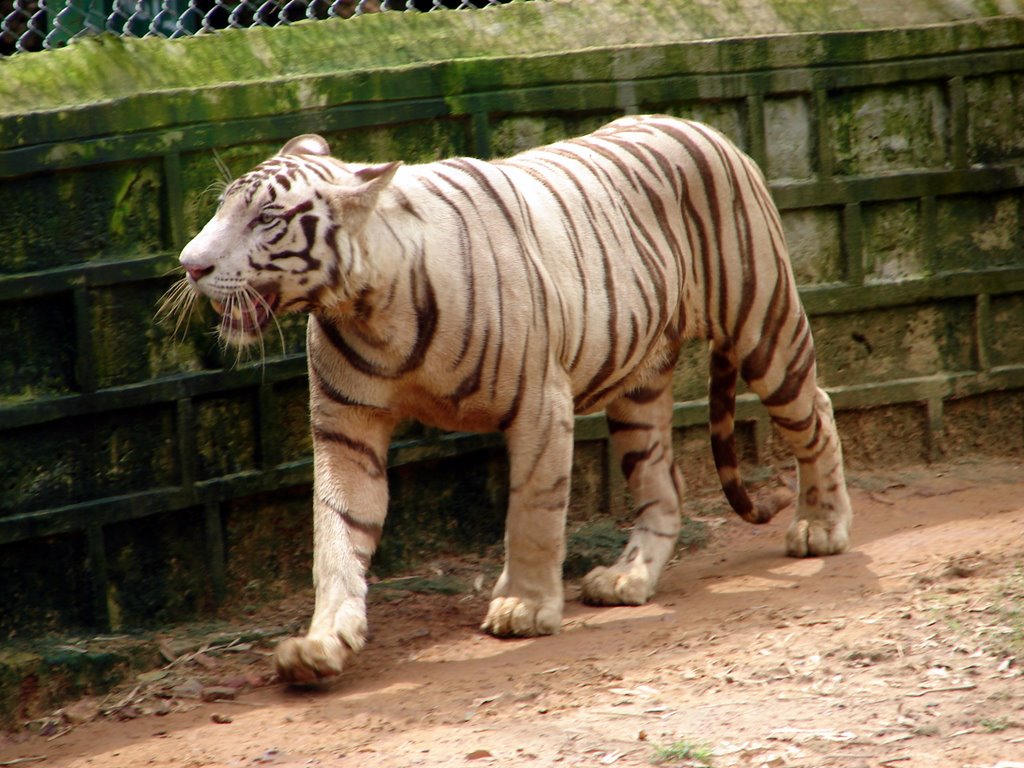
    A white tiger can only be born to parents when both of them carry the unusual gene for white colouring. The double recessive allele in the genetic code turns up naturally once in every 10,000 births. For unexplained reasons, the white colour occurs in Bengal subspecies.
    Reports of White Amur tigers are incorrect. These are Bengals that have been hybridised with the Amur subspecies at some point in time.

    The State Forestry Department brought Shubra from Delhi in 1979. She was a white tigress and had a serene temperment. She produced six litters. Nandankanan has bred and produced more than 400 tigers in the last 20 years, half of which were pure white.

    On 8th Jan 1980, India first recorded white tiger cubs born to regular tawny parents at Nandankanan Zoological Park.


    Old age home for the Royal cats

    West Bengal's first tiger rescue center is all set to come up at Jharkhali and the royal cats of Sundarban that are unable to catch their prey in old age can now find a peaceful heaven here.

    04 October, 2006

    The Bare (Bear) Necessities

    Look for the bare necessities
    The simple bare necessities
    Forget about your worries and your strife
    I mean the bare necessities
    Old Mother Nature's recipes
    That brings the bare necessities of life


    Wherever I wander, wherever I roam
    I couldn't be fonder of my big home
    The bees are buzzin' in the tree
    To make some honey just for me
    When you look under the rocks and plants
    And take a glance at the fancy ants
    Then maybe try a few

    The bare necessities of life will come to you
    They'll come to you!

    Look for the bare necessities
    The simple bare necessities
    Forget about your worries and your strife
    I mean the bare necessities
    That's why a bear can rest at ease
    With just the bare necessities of life

    Now when you pick a pawpaw
    Or a prickly pear
    And you prick a raw paw
    Next time beware
    Don't pick the prickly pear by the paw
    When you pick a pear
    Try to use the claw
    But you don't need to use the claw
    When you pick a pear of the big pawpaw
    Have I given you a clue ?

    The bare necessities of life will come to you
    They'll come to you!

    So just try and relax, yeah cool it
    Fall apart in my backyard
    'Cause let me tell you something little britches
    If you act like that bee acts, uh uh
    You're working too hard

    And don't spend your time lookin' around
    For something you want that can't be found
    When you find out you can live without it
    And go along not thinkin' about it
    I'll tell you something true

    The bare necessities of life will come to you


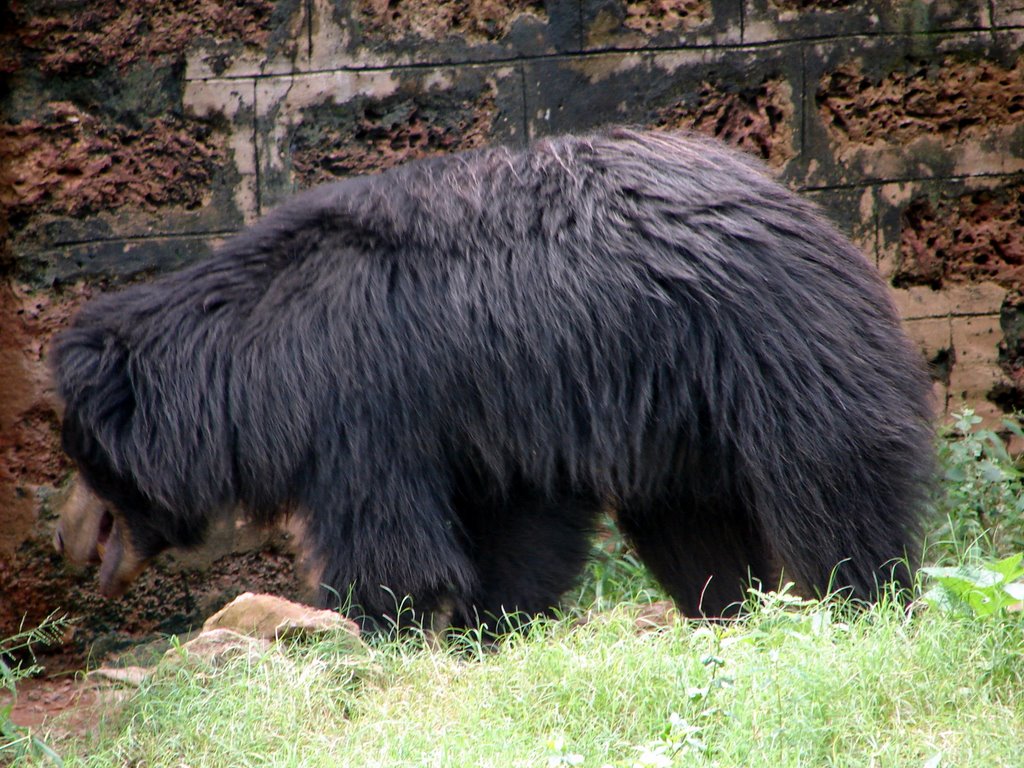
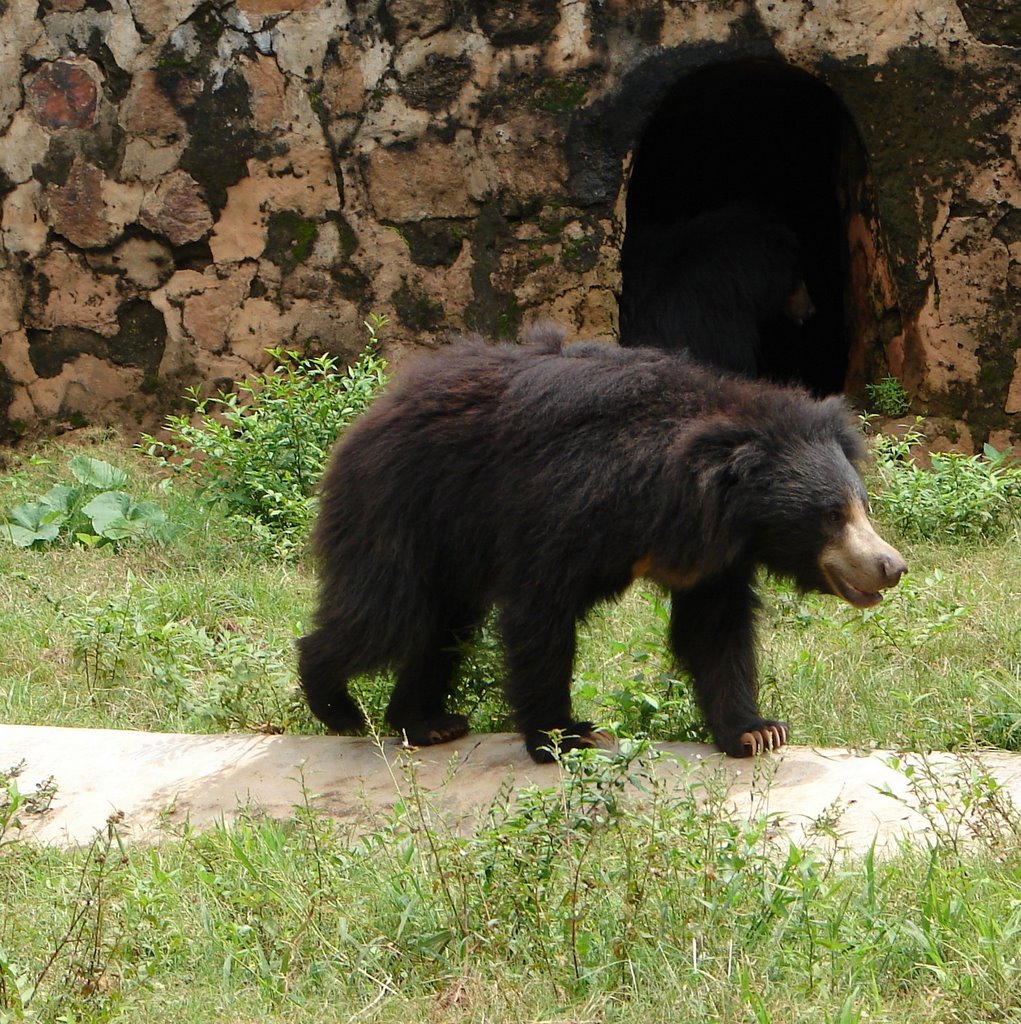
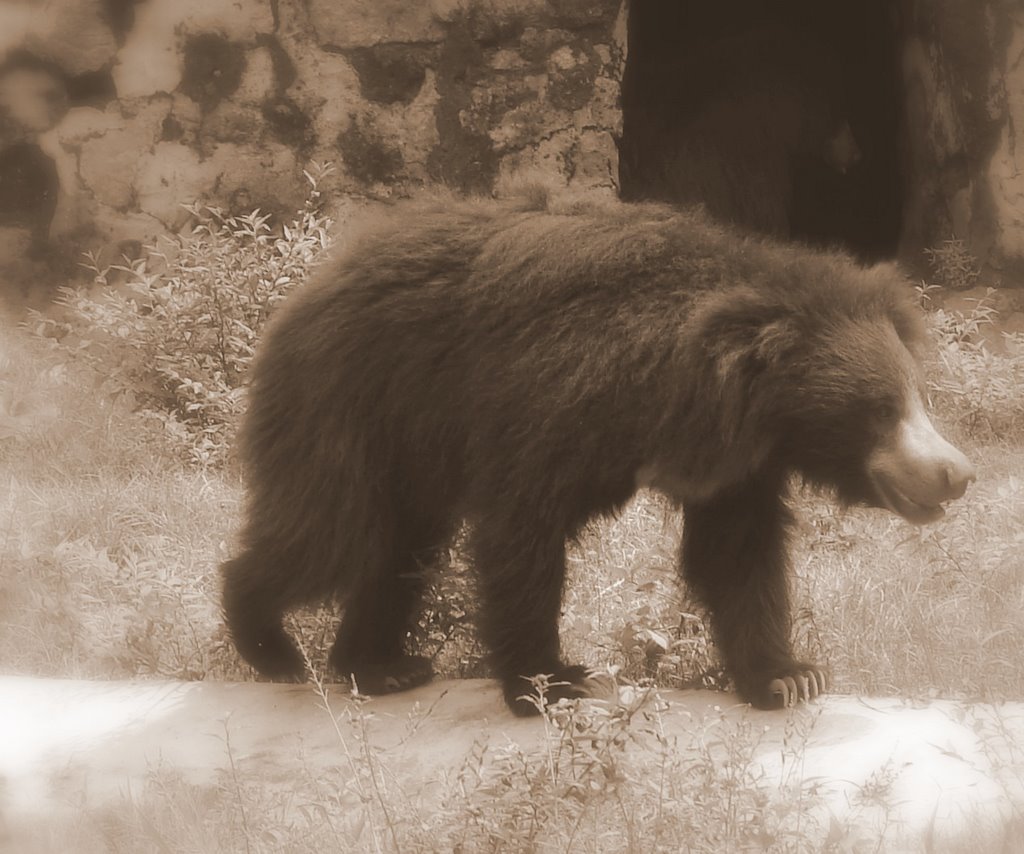
    Name: Sloth Bear

    Height: 140 - 190 cm

    Weight: 80-140Kg(males)
    55-95Kg(Females)

    Life Span: 20 - 25 Years

    Diet: Omnivorous

    Distribution Range: Sri Lanka, Inda, Bhutan, Nepal and Bangladesh

    Conservation Status: Vulnerable


    Sloth bears are stocky with long, shaggy, black hair and a while U or Y shaped marking on their chest. They have large lips, long tongue, pale muzzle and a well developed hook-like claws that enable them to climb trees and dig for termites.

    Habitat
    Thorn forests, wet forests and grasslands

    Diet
    They are omnivoros and they feed on ants, termites fruits, berries, bees, honey, carcasses and sometimes small vertebrates. Thy use their long claws to expose the insect's nests. Then they blw out the dirt and suck out the termites. They can close their nostrils to create vacuum and their mobile lips enable to scoop up the prey. Their hairless muzzles are thought to be adapted to the stings of the insects.

    Behavior
    They are nocturnal and happily share their home ranges (13Sq Km) with other sloth bears. The constant availability of food (insects, termites etc) mean that they do not undergo hibernation.

    Reproduction
    They mate and give birth at any time of the year. Females give birth to 1-2 cubs.

    Conservation status
    They are classified as vulnerable. They are hunted by farmers when they cause damage to the crops and also by hunters who seek gall bladders to use in medicines.
    Sloth bear cubs in India are poached and tortured through brutal training methods to become "dancing bears". At less than 4 weeks of age, the cub is stolen from its mother who is often killed while trying to protect her cubs, sold to traders and middlemen who in turn sell them to Kalanders.
    The cub's canine teeth are knocked out, a red hot iron needle pierces its muzzle and a coarse rope is pulled through. The wound is never allowed to heal and the cub will live in fear, hunger and pain, tied to a stake for the rest of its life.

    Himalayan Black Bear

    A native American saying holds:
    "A pine needle fell. The Eagle saw it. The Deer heard it. The Bear smelled it"


    Name: Himalayan Black Bear

    Height: 4 1/4 to 6 1/4ft

    Weight: 110Kg to 150Kg (Males)
    65Kg to 90Kg(Females)

    Life Span: 25 years

    Diet: Omnivore

    Distribution range: East to west of Asian Continent

    Conservation Status: Critically endangered

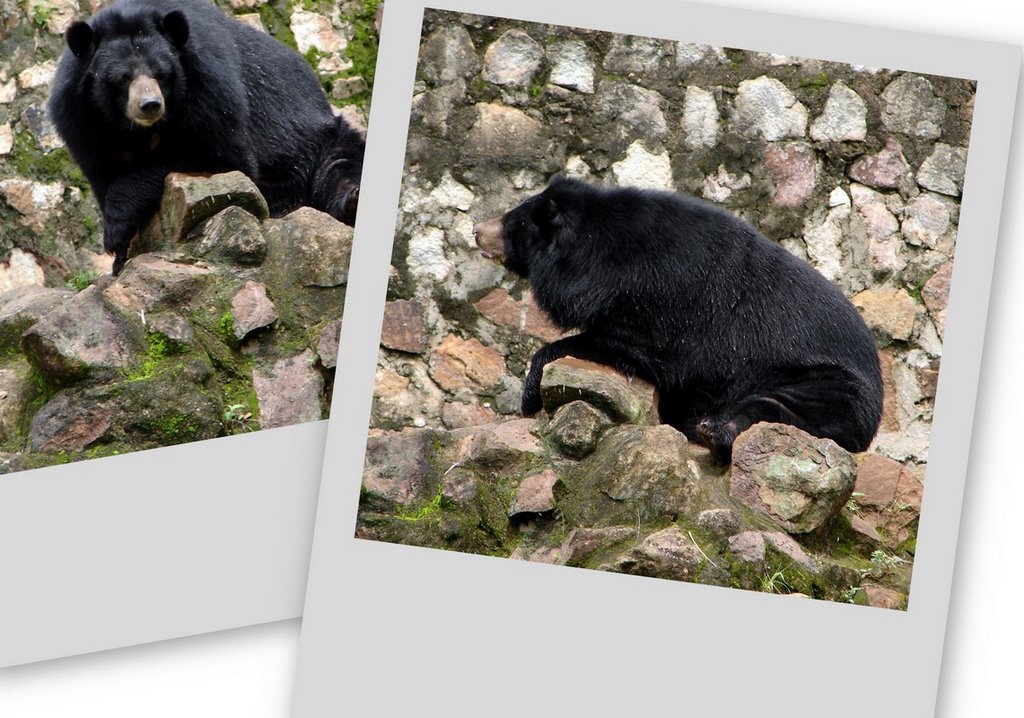
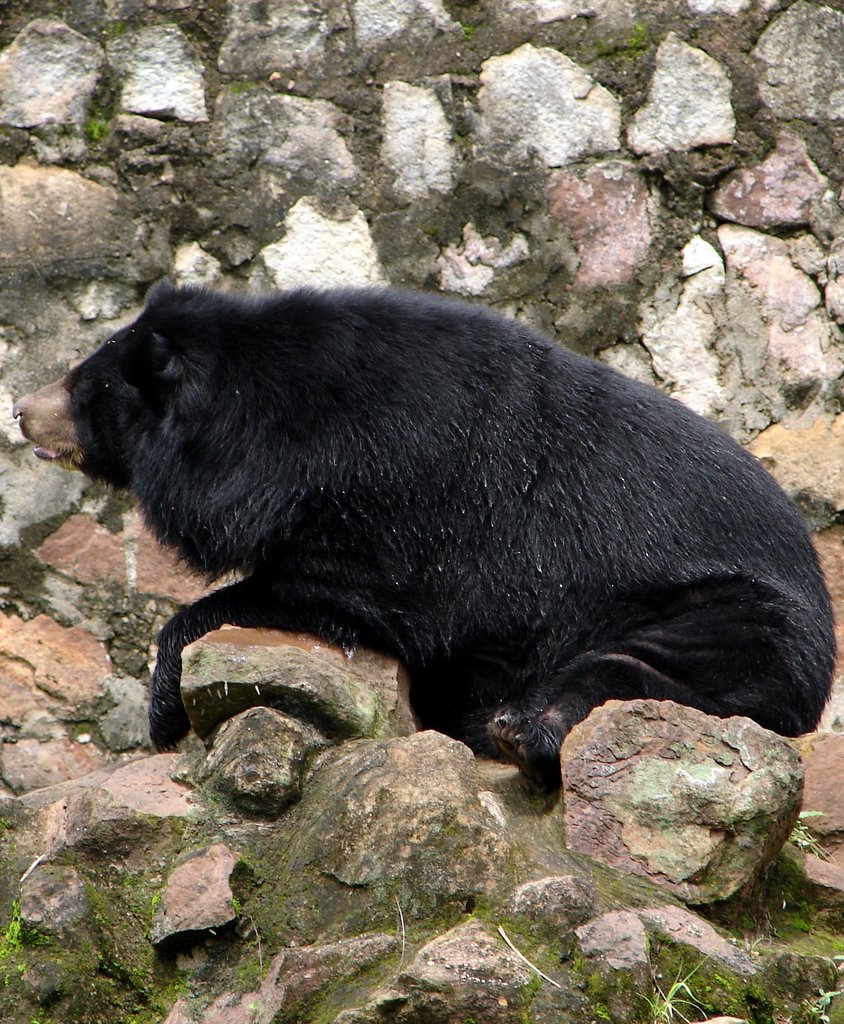
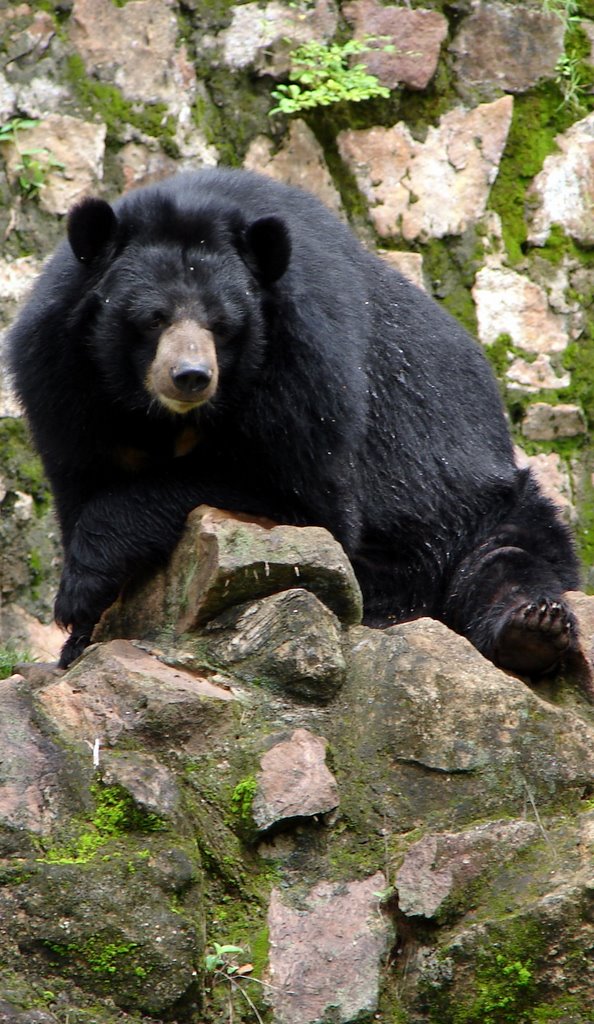
    Asiatic Black Bear (Ursus Thibetanus) is also known as Tibetan Black Bear, The Himalayan Black Bear, The Moon Bear(because of the crescent moon shape on their chest). The characteristics of the bear are its black shiny fur with a distinctive white or cream 'V' marking on its chest. The fur around the shoulders and throat is particularly long and its ears are relatively large and set rather far apart. They have short claws measuring only 4-5 cm but are nevertheless good tree climbers.

    (If you click the picture on the right and enlarge it, you can see a tiny patch of cream on its chest)


    Distribution
    These bears are found in Afghanistan, Bangladesh, Bhutan, Cambodia, China, India, Islamic Republic of Iran, Japan, Democratic People's Republic of Korea, Lao People's Democratic Republic, Malaysia, Mongolia, Myanmar, Nepal, Pakistan, Russian Federation, Taiwan and Vietnam.

    Habitat
    Forested areas, hills and mountainous regions.

    Diet
    They are carnivorous mammals. Their diet consists of small mammals, birds, fish, molluscs and carcasses. They also feed on grasses, berries, fruits, seeds, insects and honey. In autumn they fatten up for the winter by feeding on nuts.

    Behaviour
    They are solitary except for maternal family groups. They occupy a home range of 10- 20 Sq. Kms. They are mainly nocturnal (most active at night). In some areas they may be active even during the day. But this particular bear at "Nandan Kanan" park wasn't :(.
    Hibernation
    After building up a large fat store, the bears head into dens in late November and do not leave them until late March or early April. During hibernation, their heart beat drops to 8-12 beats per min compared to 40-70 in other bears. The metabolism also drops by half and its body temperature drops to only 3-7 deg. C. It also does not excrete urea or solid fecal matter while hibernating. While in other animals, this would cause poisoning, these bears transform the toxic substance into useable proteins. By the end of hibernation period, males lose 15-30% of their total weight while females lose upto 40%.

    Reproduction
    They mate from June - July and give birth during January and February. The female gives birth to 1-4 cubs that are born blind and helpless. They young, remain with the mother for a year or more.

    Conservation Status
    CRITICALLY ENDANGERED
    Problems for survival:


  • Deforestation
  • Loss of habitat
  • They are killed by farmers as they pose threat to livestock
  • They are also killed as they have a habit of stripping valuable timber trees of bark
  • They are also hunted for their gall bladders as they are used in traditional Chinese medicine


  • Bile Bear
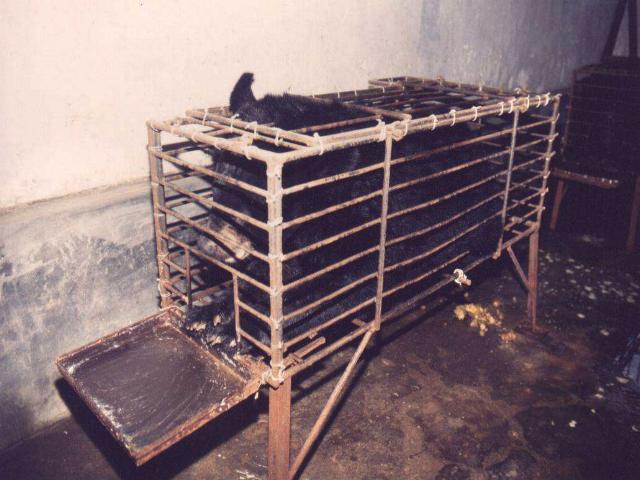
    Bile Bear or Battery Bear is the term used for the Himalayan black bears that are kept in captivity in China and Vietnam to extract bile for use in Traditional Chinese medicines.


    The Bile Bears live in cages that are slightly bigger than themselves. Bile is extracted through a cut made in the bear's abdomen and into the gall bladder. A tube is inserted into the opening to tap the bile or a steel stick is forced into the gall bladder with the bile running down into the basin. About 10 -20 ml of bile is tapped (milked) from the bear twice daily. The WSPA reports: "The investigators saw bears moaning, banging their heads against their cages and chewing their own paws while milking". Mortality rate is between 50% - 60%.

    When the bears stop producing the bile after a few years, they are either moved to another cage where they are left to starve and die or killed for their paws and gall bladders. Bear paws are considered a delicacy.

    Bear bile contains ursodeoxycholic acid (UDCA) that is used to treat fever, protect the liver, improve the eye sight, break down gallstones and act as anti inflammatory. Montreal based Axcan Pharma brought Ursodiol a commercial drug that is synthesized and not derived from animals to the market in 1998. They are as effective as the bear bile and Chinese traditional medicine practitioners should be encouraged to replace the bear bile with this medicine.