Showing posts with label Switzerland. Show all posts

17 December, 2006

Top of Europe - Switzerland

The Jungfraujoch is one of Switzerland's most attractive excursion destinations and vantage points. It has also proved to be an excellent location for a wide variety of research projects. The high altitude, clear air and easy access by mountain railway are ideal conditions for a wide range of scientific work. Astronomers, geologists, physicists, meteorologists and hydrologists - they all make an essential contribution towards our understanding of the environment.

A recommended route to follow to Jungfrau is
Interlaken Ost - Lauterbrunnen - Kleine Scheidegg - Jungfraujoch - Grindelwald - Interlaken Ost.


This unique round-trip by modern cogwheel railway takes you first to Kleine Scheidegg, altitude 2061 metres, at the foot of the notorious Eiger North Wall. We changed trains at Kleine Scheidegg and proceeded to Jungfraujoch as we were running late. We decided we would stop at Kleine Scheidegg on our way back to Interlaken. The train slowly chugged up the mountain. From here the Jungfrau Railway climbs to the station at Eigergletscher , well known for its mountain restaurant and polar dog kennels.

The trip continues through the Eiger tunnel to the stations at Eigerwand and Eismeer, with a five minute halt at each. Enjoy spectacular sightseeing through large observation windows hewn from solid Alpine rock.


Superb views extend as far as the summits of the Vosges Mountains in France and the Black Forest in Germany. The Great Aletsch Glacier, at 22 km the longest ice-stream in the Alps, begins on the Jungfraujoch-Top of Europe.


We were surprised to see snow on the mountain during summer! In fact the mountain peak is covered with snow all the year round. Before the summer heat can melt the snow away, the winter begins and the snow covers the mountains again.


I felt a little out of breath at that altitude. There were a few tables and chairs nearby. M suggested that I sit for a while on the chair and catch my breath. Only when I sat there did I realise that the tables belonged to the little restaurant nearby. A board that read something like "it is courtesy to buy a glass of drinks if you sit on these chairs" made me uncomfortable. I joined M who was by then playing in snow.


The main attractions on the Jungfraujoch are:

Ice Palace
Ice Gateway
Sphinx observation terrace
Plateau with hikes in the eternal snow
"Top of Europe" Glacier Restaurant
High Alpine Research Exhibition
ski & snowboard park, husky-drawn sledge rides,
adventure attractions: e.g. Tyrolienne, snow disk etc.


We met a couple from Mysore on our way to the Ice-Palace (more about the Ice-Palace in my next post). "Aunty" :) gave us "bombay mixture" to munch on:). They were excited to hear us speak Kannada and they walked up to us and introduced themselves. They said they were on their first trip to Europe and were excited. But we couldn't talk for long as they had to hurry and join their group who were ready to move on to their next destination. We proceeded to the ice-palace ...


The Sphinx observation hall and terrace, the glistening Ice Palace, a walk on the eternal snows of the Jungfrau plateau are the amazing all- year-round attractions on the Jungfraujoch-Top of Europe! The Ice Gateway links the Ice Palace with the glacier plateau.

The unforgettable trip to the high-Alpine wonderland of eternal ice and snow is the true "highlight" of a visit to Switzerland.

10 December, 2006

Kleine Scheidegg - Switzerland


Kleine Scheidegg means "minor watershed". This pass lies between the mountains Eiger and Lauberhorn and connects Grindelwald with Lauterbrunnen. The watershed lies between the catchment areas of the Weiss (white) Lütschine river in the Lauterbrunnen valley and the Schwarze (Black) Lütschine flowing through the Grindelwald valley. The different sediments from each valley gives the waters their different colours. Tourists board the Jungfrau Railway at Kleine Scheidegg to travel to Jungfraujoch.


Impressions of Kleine Scheidegg are dominated by the spectacular views of the 4000m high peaks of the Jungfrau and Mönch and the proximity of the awe-inspiring Eiger North wall.


The two old-world Scheidegg hotels Bellevue (1842) and Des Alpes (1896)


Zara sa jhoom loon mein
arre naa re na re naa...
Zara sa ghoom loon mein
arre naa re na re naa..


One of the many such memorable songs shot in Swiss Alps...

I am not sure if the song was picturised some place near Kleine Scheidegg, but the picturesque town(the small settlement here doesn't qualify for even a hamlet)reminded us of the movie "Dilwale dulhaninya le jaayenge".

We had taken a direct train from Grindelwald to Jungfraujoch but were fortunate enough to miss the direct train back to Grindelwald. We had boarded the train to Kleine Scheidegg while returning to Interlaken and this had provided the opportunity to spend a few mintues in this romantic little place.

Train to Jungfraujoch - Switzerland

Needless to say, our delayed start from Interlaken further delayed our trip to Jungfraujoch. Trains leave from the Grindelwald station to the "top of Europe" at regular intervals and the intervals are sufficiently large :(. We arrived at Grindelwald a little later than we had planned and we missed the connecting train to Jungfrau. We spent a few minutes more than an hour at the station waiting for the next train to the mountain.

M was a little unhappy with the high ticket price to the top of Europe. But as the train started the ascent, he thanked me a few times :) for convincing him to ride the train. The view was breath-taking. Wish my parents, sis and grandmom were with me :(. Climbing the highest mountain in Europe seated in a comfortable train was something that I had never imagined. Wish Indian Government too makes similar arrangements that would enable us to attract more tourists to our beautiful country. This is a dream, which I am sure will never be fulfilled :(.


The author of Muirhead's Switzerland published this description in 1923:

The Jungfrau Railway, the highest railway in Europe and one of the most interesting of all mountain lines, was constructed in 1896-1912 from the designs of Adolph Guyer-Zeller of Zürich. It attains a height of over 11,000 ft., thus bringing the most unathletic into the upper regions of the expert climber. Most of the line is on the rack system (Strub's patent), with overhead trolleys (steepest gradient 1:4), but there is also a short section beyond Eismeer on the ordinary or 'adhesive' system (gradient 1:14). The power is generated in works near Lauterbrunnen and Burglauenen, whence it is transmitted by high-tension lines. The gauge is 3 ft. 4 in. The first section of the line is in the open air, but beyond Eigergletscher it runs through a great tunnel (4-3/4 m. long, 10 ft. high, and 10 ft. wide), piercing the limestone and gneiss rock of the Eiger, Mönch, and Jungfrau. From the Jungfraujoch the intention was to carry up the line for 2000 ft. more, leaving the summit to be attained by an elevator 242 ft. high, but there does not seem any immediate prospect of completion of this scheme. Telescopes are provided at the stations for the use of visitors.

The trip can hardly be recommended except when the weather is such as to make a clear view from the top practically certain. The transit of the long tunnel (fully 1/2 hr.) is rather wearisome.


Like a friend once rightly said "a picture speaks volumes. A single picture can express more than 1000 words do". So I shall let the pictures speak for themselves of the most beautiful mountains I've ever been to...


Grindelwald - Switzerland


The mountains surrounding Grindelwald had been considered threatening and inhospitable forces of nature (teeming with dragons, gnomes and spectres) for centuries. It experienced an unexpected surge of popularity in the 1800s. This was brought about by the writers and artists of the time, who, with little actual alteration of that age-old image, suddenly made the Alps seem wildly romantic. When these romantics finally arrived in Grindelwald, it wasn't solely to admire those massive chunks of rock that form its southern ridge. Nor was it primarily to study the flora and fauna of an area that was for so long shrouded in mystery. Instead, the main focus of attention was those glistening rivers of ice, the glaciers. Grindelwald has two glaciers, simply called the "Upper" and the "Lower," practically right in its back yard.


The overall growing interest and awareness of nature drew greater interest for Grindelwald and its mountains. Grindelwald's natural beauty, dramatic mountain scenery, cultivated landscape and good accessibility all contributed to its popularity. One of the olderst depictions of the lower Grindelwald glacier originated from the year 1642. In 1751, Joh. Georg Altmann used the Grindelwald valley as the basis for his research work into the historical and physical evolution and features of the glaciers in the Swiss mountains.


The earliest known document featuring the village name of Grindlewald was in 1149. In 1252, Ita from Wädiswil, baroness of Unspunnen, sold her estate in Grindelwald for 500 pounds to the Interlaken monastery. In 1349, the valley's inhabitants challenged the monastic rule. In a petition dated 3rd January, 1349, the community of Grindelwald encompassing all of the Lütschinen valley, had formed an alliance with the inhabitants of Unterwalden to gain mutual support against the Interlaken monastery. The monastery, however, summoned help from the ruling body in Berne and the uprising was "nipped in the bud".On the 28th February, 1349 a letter ensued demanding that the inhabitants of Grindelwald renounce their alliance with Unterwalden and must once again submit to the rule of the monastery and its protecting power in the city of Berne.

Walt means "Woods", Grindel means either "fence" or "shelf". Could the name thus mean "wooded shelf" or "Barricade forest"???


It wasn’t until the early 1800’s that the farming village turned its eye toward tourism. The first hotel was built in 1818, and the tourists have been coming ever since. The town’s Swiss chalet-style buildings add a traditional ambience to this Alpine town. Grindelwald is one of the few large resorts in the Alps where farming has been able to survive and co-exist alongside a dominant tourist industry.


The Bernese Oberland village has for decades benefited from a fragile symbiosis between agriculture and tourism.

“Tourism needs agriculture and agriculture needs tourism,” says Grindelwald farmer Sämi Brawand.


The tourist industry benefits because farmers preserve the picturesque pastoral landscape.

“If farming were to disappear, the landscape would be completely altered,” says Brawand. “Everything would be overgrown and forests would slowly encroach on the pastureland.”


Morning Walk in Interlaken - Switzerland

790Kms away from office and not having to wake up early to cook and pack lunch to office? That sounds like heaven :). Sure! I did wake up early, but only to enjoy my morning walk in the pristine town. We (me and M) met in the hostel lobby to go on our morning walk. The hostel was serving free breakfast and since it was quite early in the day, there weren't many people in the dining hall. It seemed to be a good idea to eat our breakfast and then go on our walk. Mr and Mrs MK joined us at the breakfast table a little later.

We had cereal with strawberries (the cereal tasted delicious with strawberries and now, I always add strawberries to my breakfast cereal), 2 slices of bread with butter and jam, a cup of yoghurt and also coffee. We couldn't believe that we had eaten all that.


We waited for the couple (MK and his wife) in the reception who seemed to be taking unusually long time to finish their breakfast. I was impatient and told M I would go over to the guest room to pick up the tourist brochures. M informed the couple that he would be in the guest room too and joined me there. The telephone in the hostel guest room looked like an instrument from Einstein's era.

We picked up the brochures and took a tour of the hostel.The wooden chalet (hostel) is over 150 years old and was first a hotel called Meadow Lodge and later Hotel Quisisana. From 1932 - 1997 it was used as a old peole's home and was called "Alters- und Erholungsheim Sonnenhof". In the beginnig of the year 1998 it was renovated and opened up as Backpackers Villa Sonnenhof. It is a nice little warm hostel and the people at the reception were really very kind and friendly.

Finally the couple finished their breakfast and joined us in the guest room. They wanted to go back to their room and change into warm clothes before we left to Grindelwald. We (me and M) set out on our morning walk. The roads were deserted at 7:30 AM and made me wonder if the sand in the hourglass has stopped flowing.


"Landing place -- 0.2 Km" -- a sign outside the hostel!
Paragliding is a favourite "adventure sports" in Interlaken. This activity goes all year round depending on the weather conditions. The outdoor sports organisations offer different location choices from altitudes of 500 - 1400 mts. If you find the activity expensive, you could try trekking or mountain biking. We stuck to the most economic way of exploring the town -- walking ;)

The little town is at the foot of the imposing mountains Eiger, Mönch and Jungfrau. In a few hours, we would be atop Jungfrau. That was an exciting thought! If that didn't pump up the adrenaline in my blood, I don't know what else would ;)! We returned to the hostel to check on the couple and see if they were all "dressed up" to go to Jungfrau. Luckily, they "announced" they were and I was sure glad they were. Every minute that I spent in this town was a minute away from the snow that I had been waiting to play with. The very thought was frustrating.

"As in a dream!" Lord Byron apparently exclaimed on seeing the views of Interlaken and area. Felix Mendelssohn wrote to his mother:"Anyone who has not seen Interlaken's vistas does not know Switzerland.". This beautiful little town is nestled between the lakes of Thun ("toon" as in "cartoon") and Brienz and has managed to maintain the traditional charm of a Swiss village.

We walked to the Interlaken OST station that is just about 0.7 Km from the hostel, to take the train to "Grindelwald".

04 December, 2006

Nightlife in Interlaken - Switzerland

Romans took over Interlaken from the Celts in 58BC. They gave it the Latin name "Interlacus" meaning "between the lakes". The Germans took over Switzerland and the Alemanni tribe moved into the valley in 260AD. The name was mutated to "Inderlappen". The Franks ruled the country during the 6th C, but they had little effect on the German language and culture in the valley.

In 1133, Augustinian monks founded the "Interlacus" monastery. The monks gained power by buying up all the surrounding lands, during the next few centuries eventually becoming the biggest landowners in all of Bernese Oberland.

Around 1280, Count Berchtold of Eschenbach built a town on the land rented from the monastery and named it "Unterseen" -- "between the lakes"


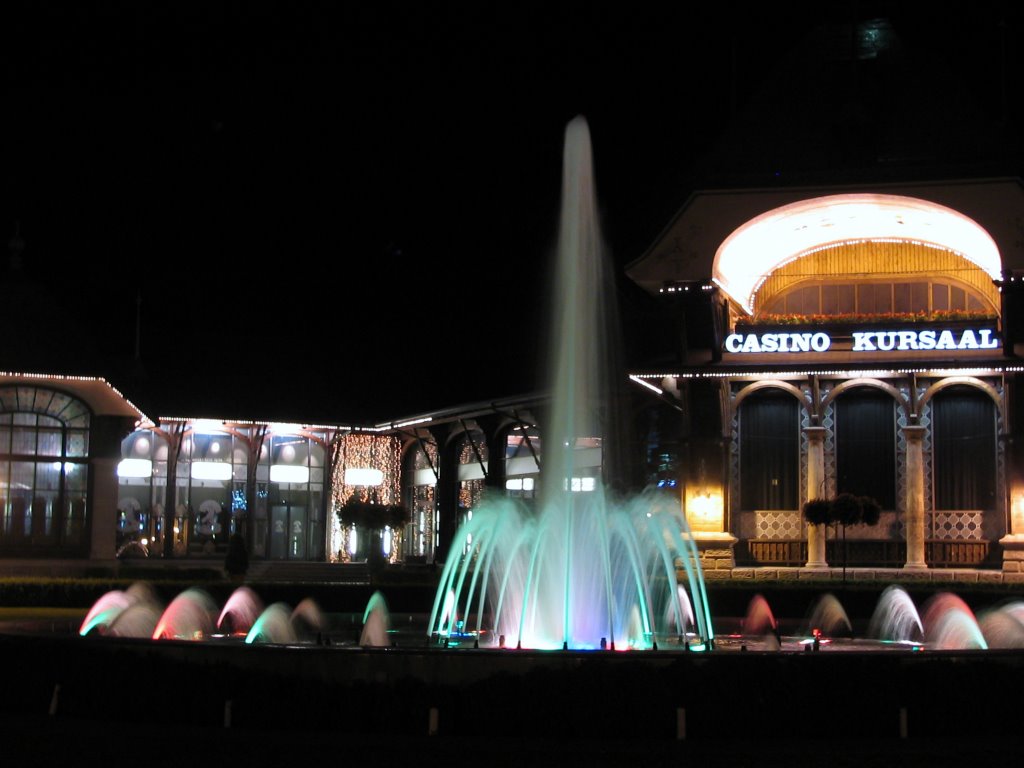
"Kursaal" (spa) was opened in 1859. By the mid 1800s, the town was already a popular spa. One source also speaks of "goat milk cure" but it does not specify whether people drank the milk or wallowed in it :).


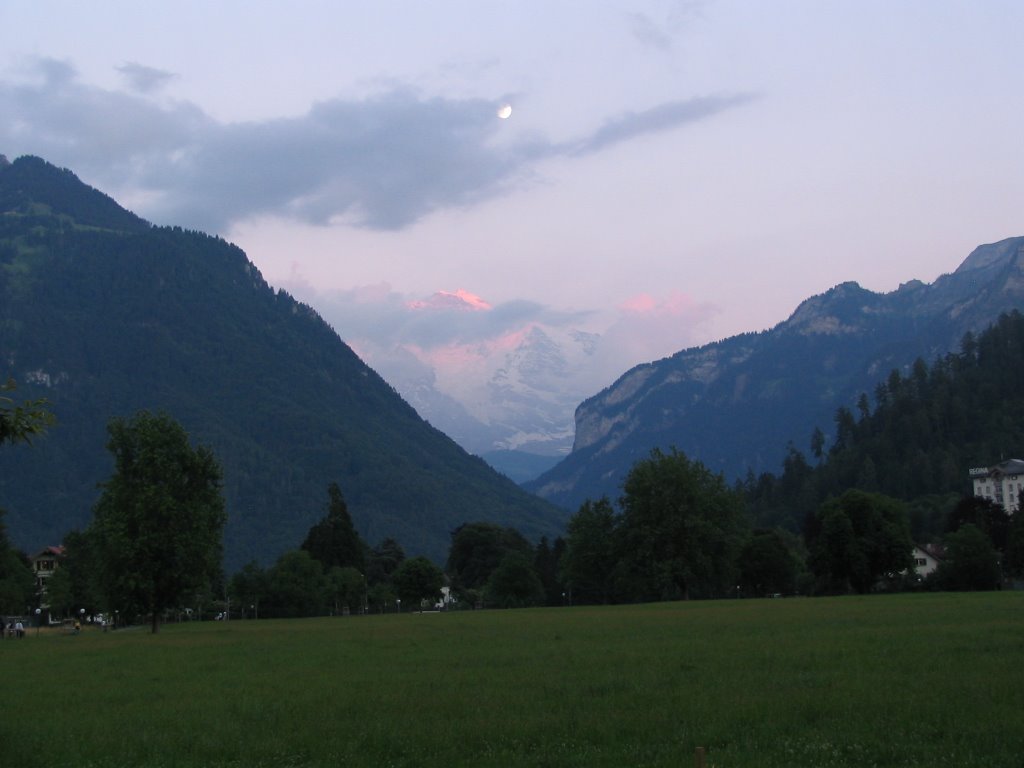
In 1860, a group of 37 hotel owners bought the huge central park known as the Höhematte (high field). They wanted to keep the area open, so that tourists could always have a view of the snow capped Jungfrau.


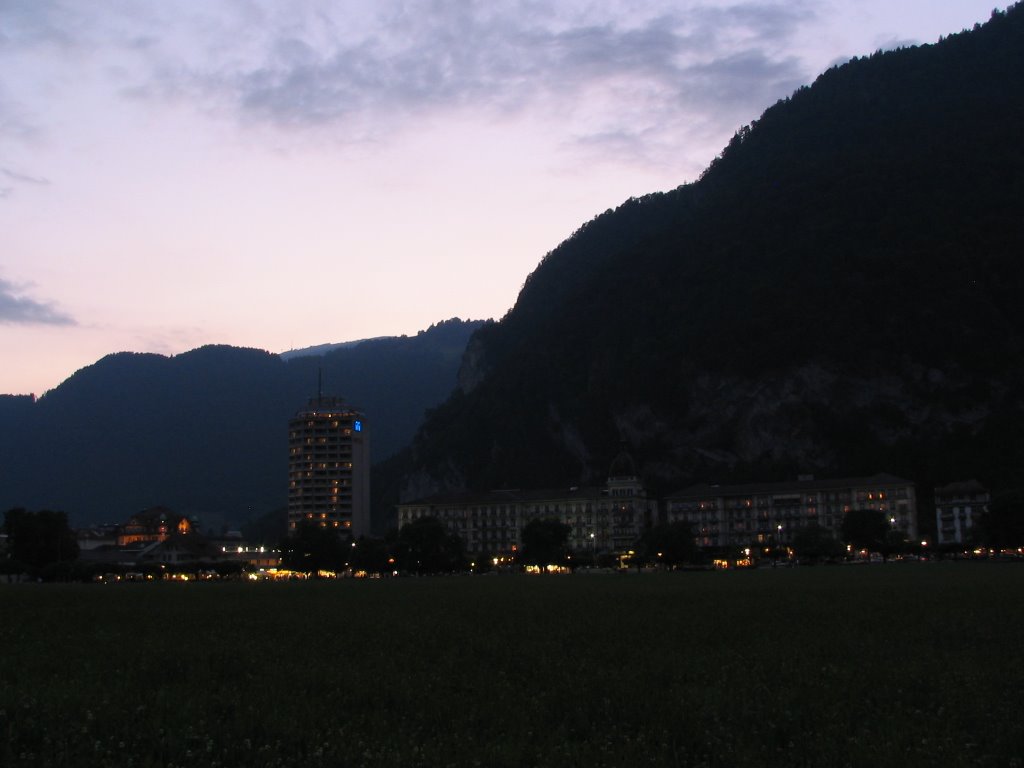
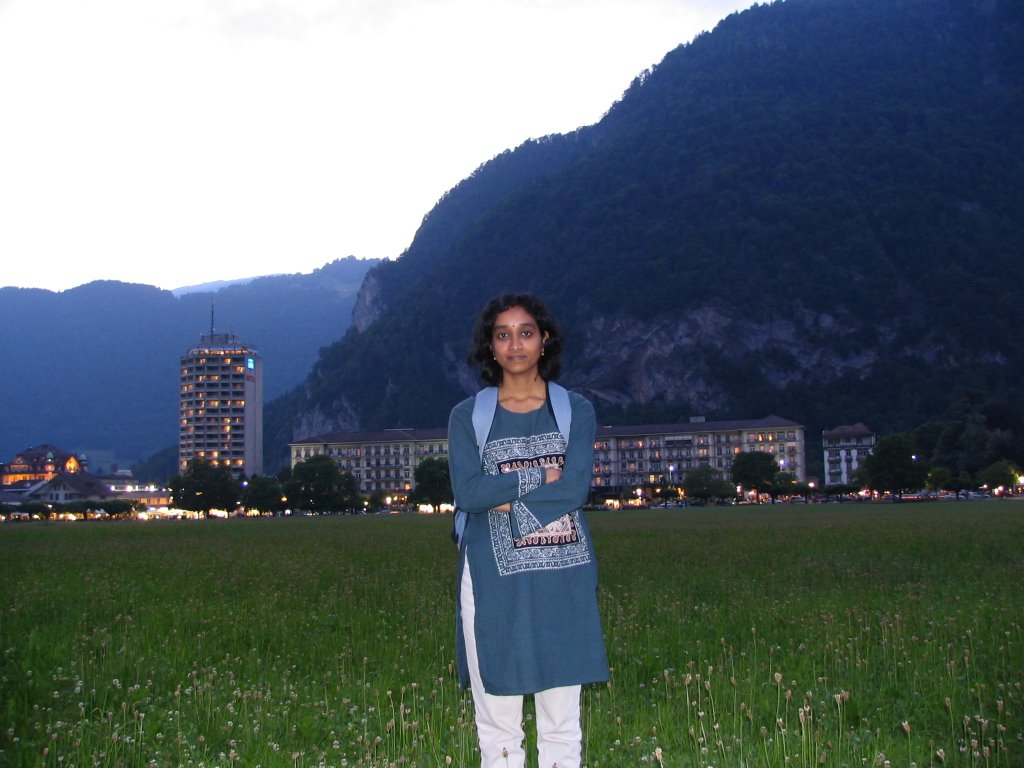
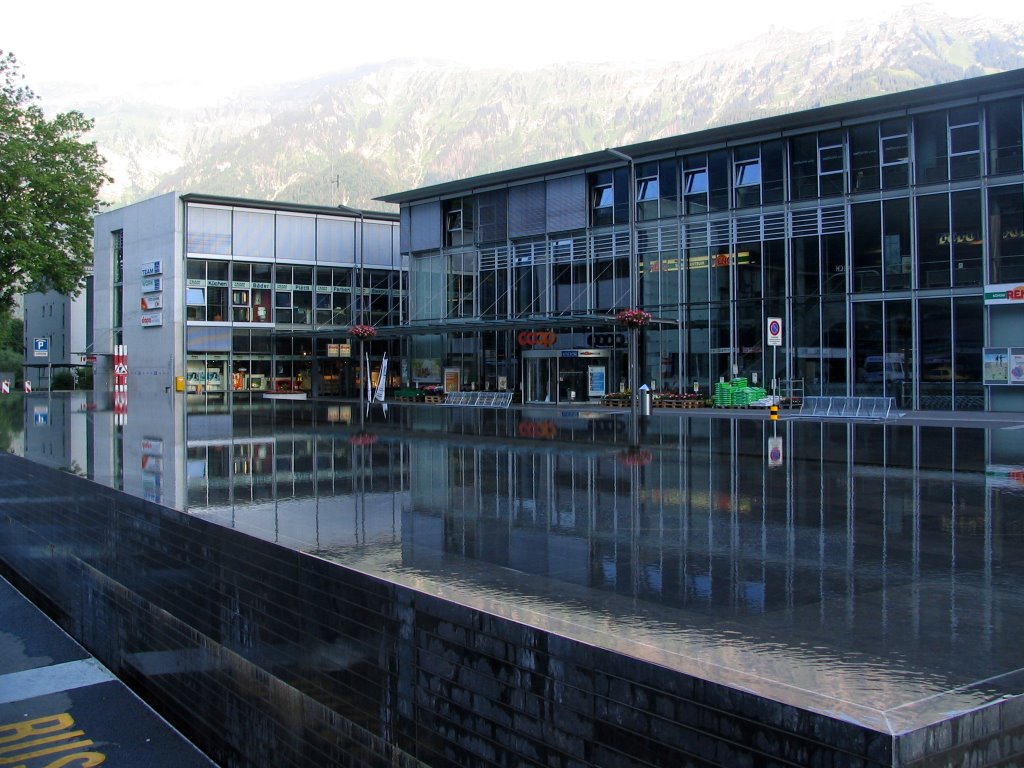
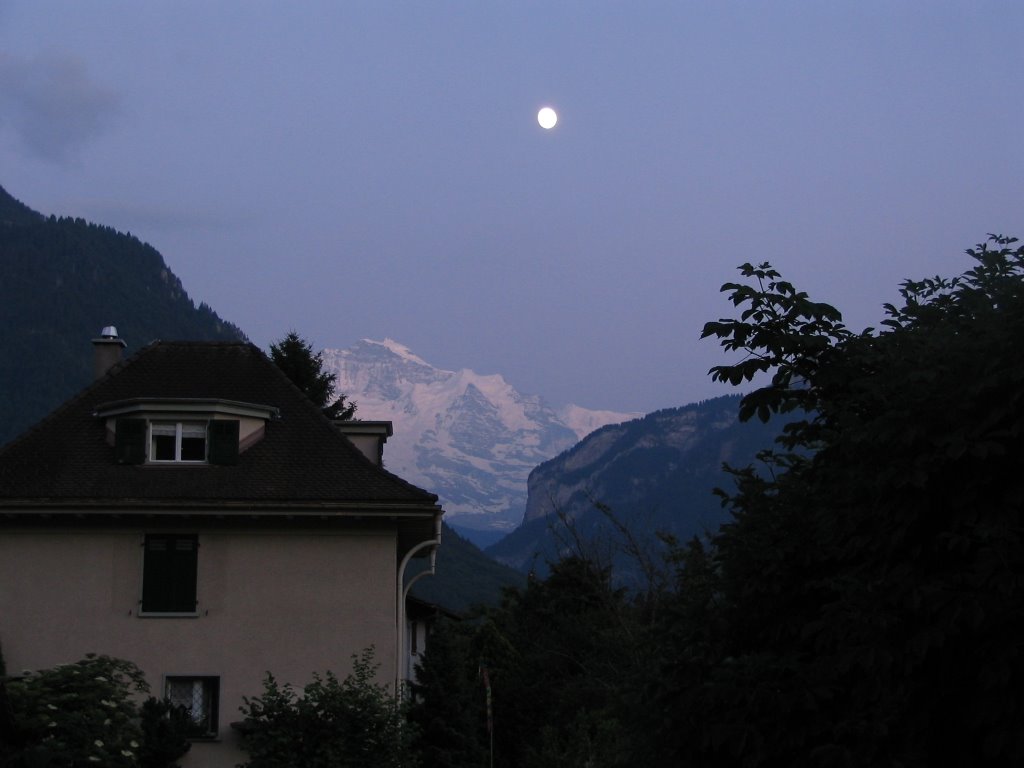
You can spend a few minutes outside the Interlaken OST train station enjoying the snow capped mountains. A walk from the station to the town center is sure to remind you of at least one of the numerous Bollywood movies shot in Interlaken.


In almost the three hours that we spent walking in the town we saw just two cars. The cool breeze, the unpolluted air and the snow mountains sure make you wish you lived in this beautiful town!


Prior to 20th C, Italy, Germany, France, Englad and the Netherlands were the pioneers in clock and watch development. Clocks in these countries were in demand either as luxury items for wealthy monarchs and aristocrats or as precision instruments for scientific purposes, first and foremost for determining longitude at sea. The Swiss had neither aristocracy nor ships for exploring seas. By the beginning of 17th C, Jean Calvin banned ostentatious shows of wealth, forcing jewellers to turn their skills to watchmaking.

The Swiss were good at commerce and were backed by their good banking systems. They were innovative and their productions were export oriented. Initially the watchmakers pirated French and English designs and produce them cheaply by their efficient production methods. As the industry flourished, they created their own designs.


On February 19th, 2001, Longines celebrated the 30 Millionth Longines Watch with a commemorative collection of 990 pieces featuring an L.990 caliber mouvement. The company was started in 1832 by Auguste Agassiz who moved to the tiny Swiss town of Saint-Imier and found work at the Comptoir horloger Raiguel Jeune, a watch parts trader.

Based in the small Swiss Jura town of Le Locle for over 150 years, the Tissot company has never ceased to create innovative timepieces.

The first Ebel watch was launched in 1912.

Louis Brandt 13''', 1892 -- 1st minute-repeater wristwatch in the world was launched by Omega. GURZELEN PATENT 19''' 1885 -- Lépine calibre, digital display of hour/minute, analogue display of seconds (small or large hand). Time-setting button.


We sure had walked a lot! We were now starting to feel hungry. We had chapatis and chutney powder and we only needed curd to have our dinner. Interlaken is a sleepy town. Not many shops are open during the weekend. We walked into the only shop that was open on the main street. There was yogurt that came in all flavors, but there was no plain yogurt :(. After much discussion we bought the Aloe Vera flavored yogurt. Oh Sweet Lord! I used Aloe Vera as a face moisturiser and now I had to eat it? YUCK! But did I have a choice?!


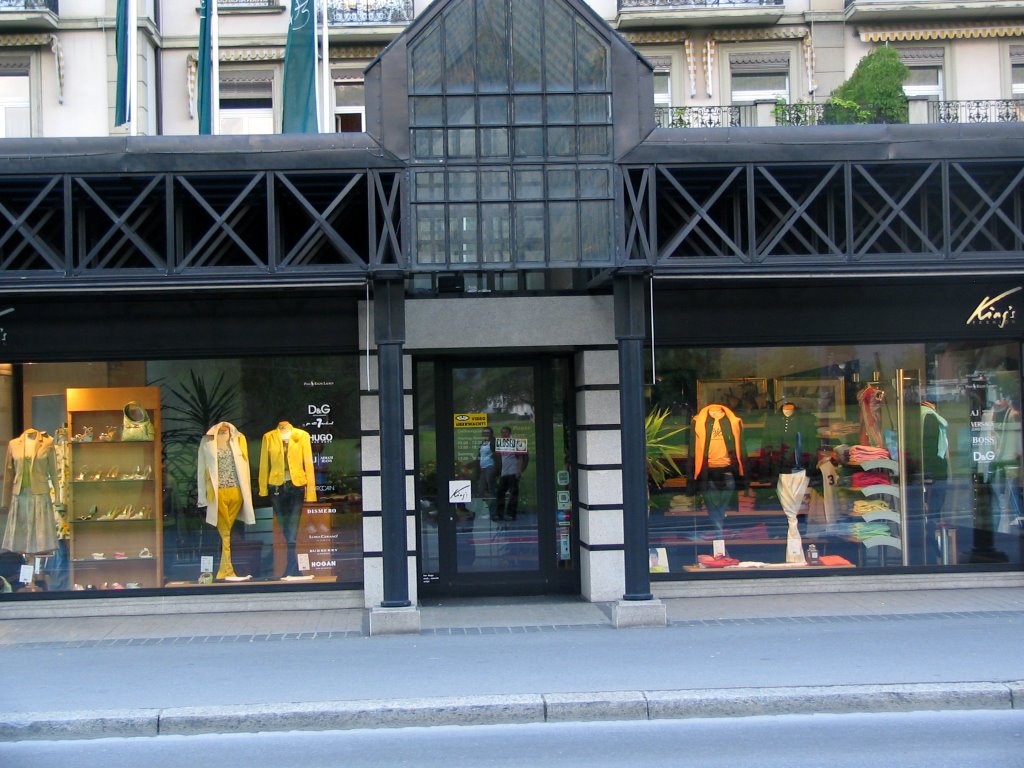
A trip to Switzerland is incomplete if you don't buy the Swiss bells and Swiss knife. Buying a Swiss Knife was out of question as I would have to check in my baggage to board the flight. I didn't have a cabin baggage that I could safely lock and checkin. The backpack that I had wasn't locked and I didn't have a spare lock with me :(. So checking in the baggage wasn't a good idea. The only other option that I had was to buy only the cow bells and forget about the knife :(. I bought one bell for my sis and another one for the volunteer back in India who had been helpful in suggesting a visit to Jungfraujuch. Wish I had bought a cow bell for myself :(. But I had only 200CHF with me and I needed it to buy watche for my dad. Never mind! I shall tell Darshan to buy one for me when he goes there sometime next year :). I also bought three key chains -- one for myself, another for my sister and the third one for my fellow volunteer who had specifically requested for it.


We returned to the hostel to dine and retire for the night. We were to go to Jungfraugh the next morning. Needless to add, I dreamt of snow the whole night :)